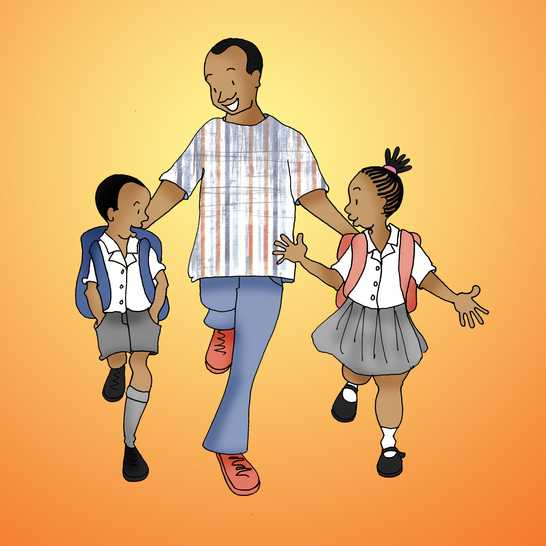
Odongo ni Apiyo nebapila hamoho ni bo ndataabona kwa tolopo. Nebalata hahulu nako ya pumulo. Neisi feela kuli likolo nelikwala, kono kabakala kuli nebayo potelanga bo kukwaabona. Bo kukwaabona nebapila mwamunzi wo kwatuko a lisa lelituna mone kuyambiwanga litapi.
Odongo and Apiyo lived in the city with their father.
They looked forward to the holidays. Not just because school was closed, but because they went to visit their grandmother. She lived in a fishing village near a large lake.
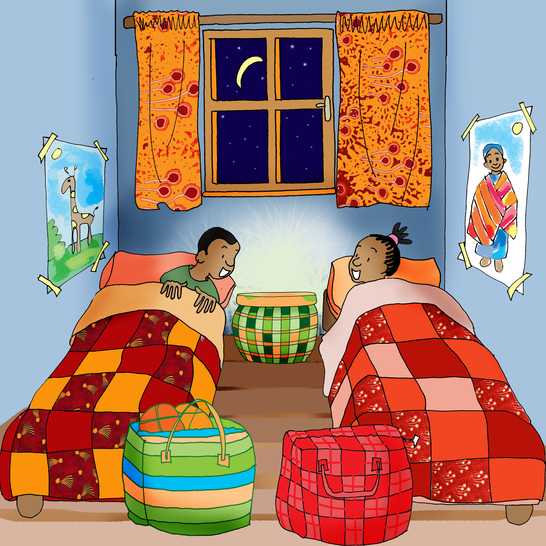
Odongo ni Apiyo nebatabile kakuli neseili nako ya kuya kuyo potela bo kukwaabona babasali hape. Busihu bwa kuzuha lizazi la kufunduka musipili tuna wo, baitukiseza ni kulonga libyana zabona mwa mikotana. Bapalelwa kulobala mi baambola busihu kaufela kaza musipili wabona wa kuya kwa pumulo.
Odongo and Apiyo were excited because it was time to visit their grandmother again.
The night before, they packed their bags and got ready for the long journey to her village. They could not sleep and talked the whole night about the holiday.
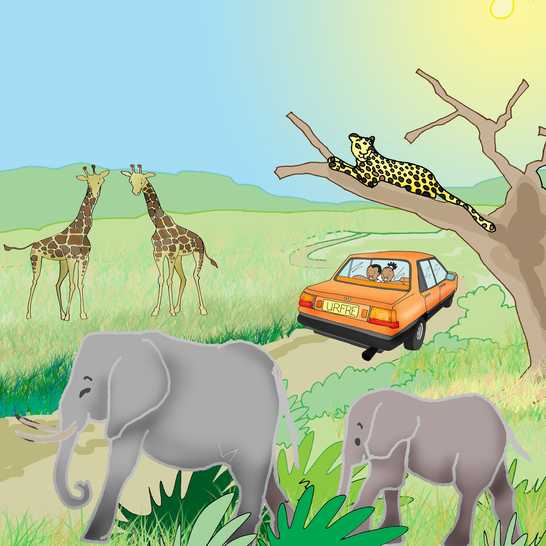
Lizazi lelitatama, ili nako ya kakusasani, bakala musipili wabona ni moota yabo ndataabona. Bafita mwa malundu, mwahalaa lifolofolo ni mwa masimu amatuna mokucezwi licalo za tii. Nebasweli kubala limota ni kuopela lipina.
Early the next morning, they left for the village in their father’s car.
They drove past mountains, wild animals and tea plantations. They counted cars and sang songs.
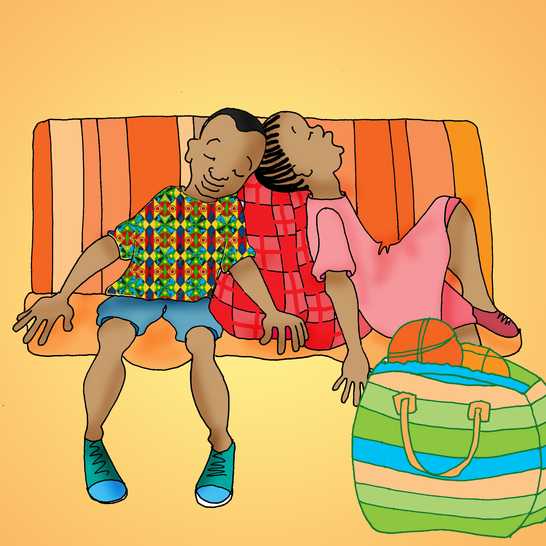
Hasekufitile nakonyana, banana ba, bakatala mi balobala.
After a while, the children were tired and fell asleep.
Bo ndatae Odongo ni Apiyo babazusa hase bafitile mwahae yabo kukwaabona. Nebafumani bo kukwaabona, bo Nyar-Kanyada inge baipumulisa fa museme mwatasaa kota. Libizo le la Nyar-Kanyada mwa mushobo wa si Luo litalusa kuli, “mwana wa musali wa batu bakwa Kanyada”. Neeli yanatihile mi yo munde.
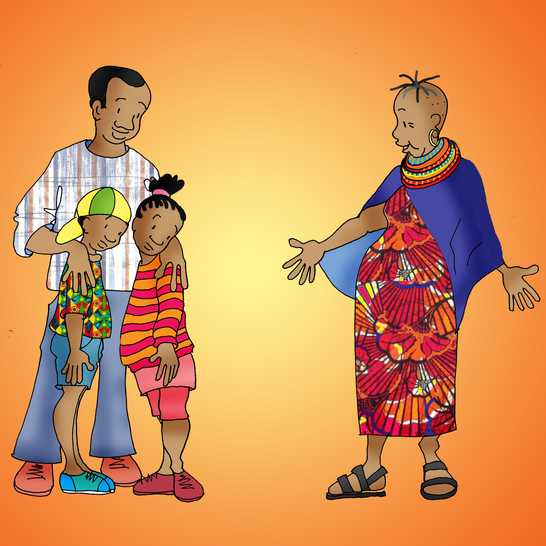
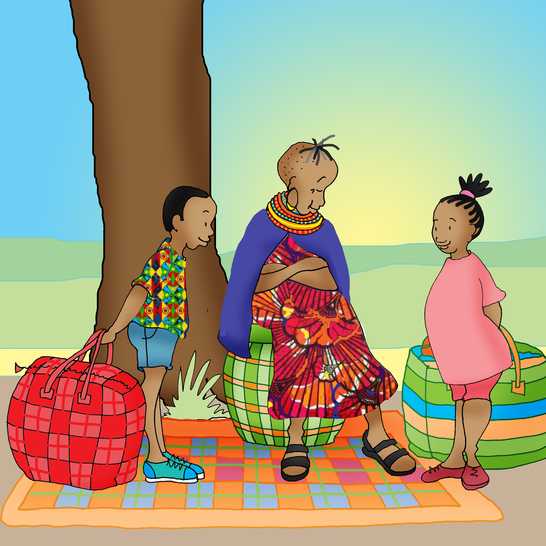
Father woke up Odongo and Apiyo as they arrived in the village.
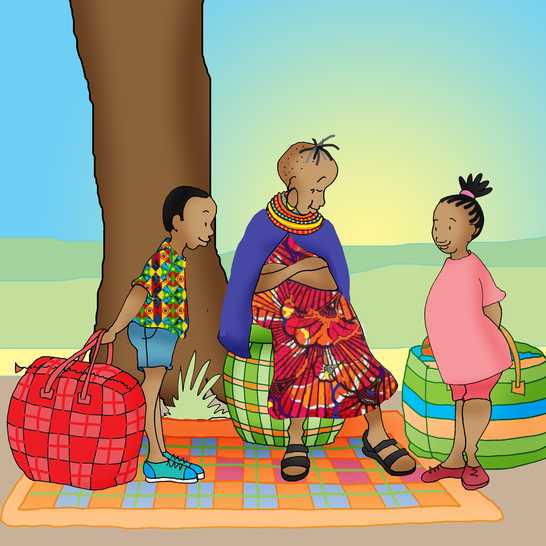
They found Nyar-Kanyada, their grandmother, resting on a mat under a tree.
Nyar-Kanyada in Luo, means ‘daughter of the people of Kanyada’. She was a strong and beautiful woman.
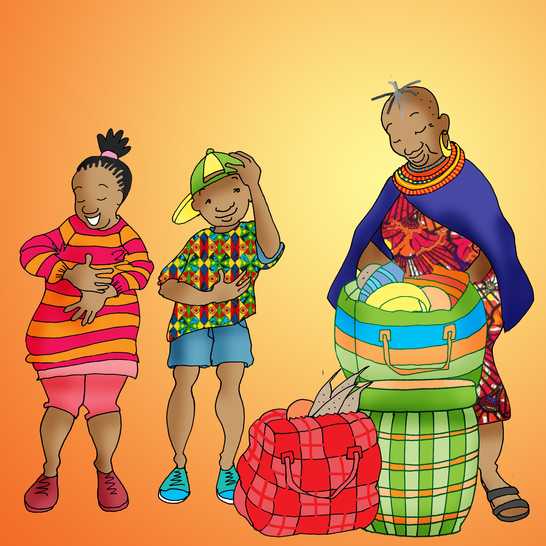
Nyar-Kanyada abaamuhela hande baenyi bahae ni kubina inge apotoloha-potoloha mwa ndu ni kuopela tupina katabo. Baikulu bahae Nyar-Kanyada nebatabile hahulu mi bamutambeka limpo zahae zene bamulwalezi zenezwelela kwa tolopo. “Kakukala hamukwaulule mpo yezwa kuna,” abulela Odongo. “Baatili, hamukalele yaka pili,” abulela Apiyo.
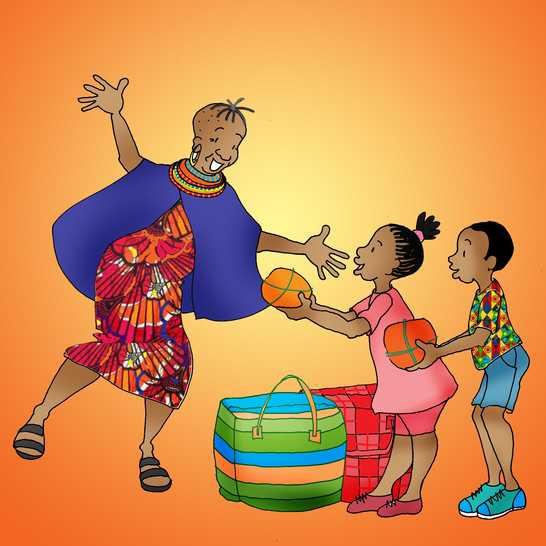
Nyar-Kanyada welcomed them into the house and danced around the room singing with joy.
Her grandchildren were excited to give her the presents they brought from the city.
“First open my gift,” said Odongo.
“No, my gift first!” said Apiyo.
Hase bafelize kukwaulula limpo zabona, bo kukwaabona ba bafuyola ka siizo.
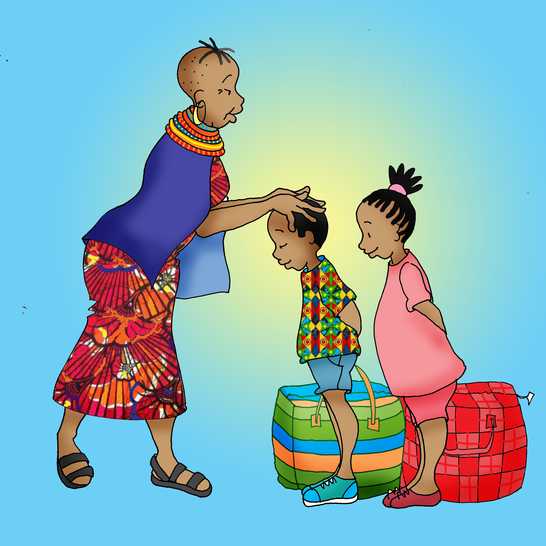
After she opened the presents, Nyar-Kanyada blessed her grandchildren in a traditional way.
Habafelize zeo, Odongo ni Apiyo bazwela fande nikukala kumatisa lipulumuki ni linyunywani.
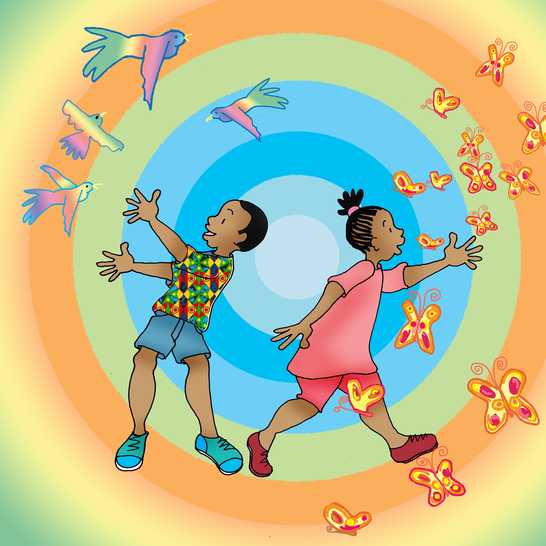
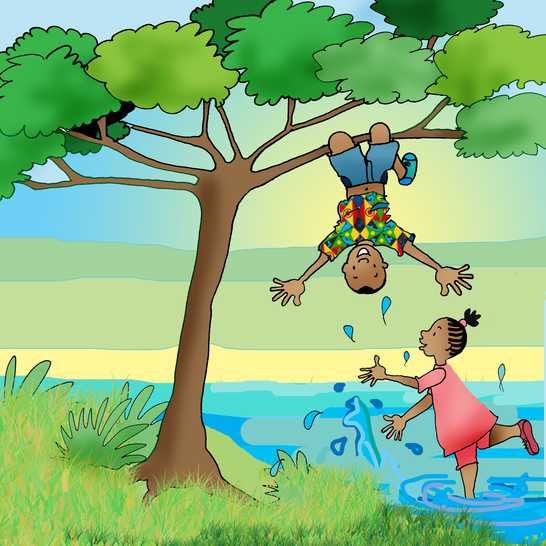
Then Odongo and Apiyo went outside. They chased butterflies and birds.
Bapahama kwa likota ni kutapwita mwa mezi a mwa liisa.
They climbed trees and splashed in the water of the lake.
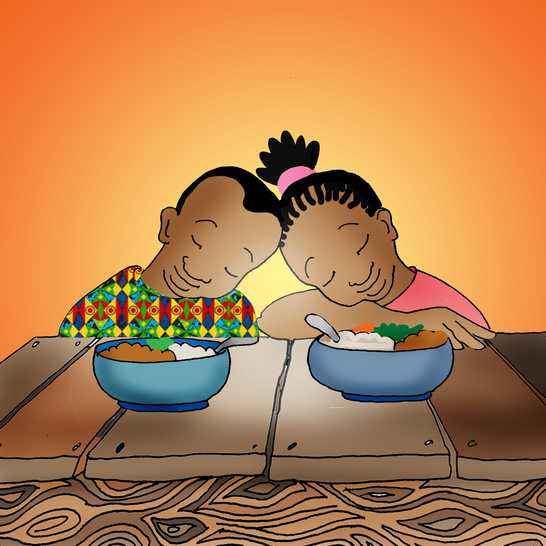
Hase lilikezi lizazi, bakutela kwa hae kuli bayoca mulalelo. Basikafeza kale kuca bakala kuozela!
When it was dark they returned to the house for dinner. Before they could finish eating, they were falling asleep!
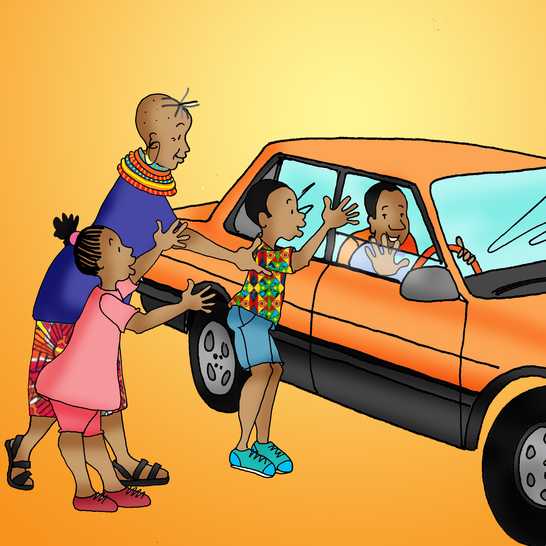
Lizazi lelitatama, bo ndataabona bafunduka kukutela kwa tolopo kusiya banana kubo kukwaabona, bo Nyar-Kanyada.
The next day, the children’s father drove back to the city leaving them with Nyar-Kanyada.
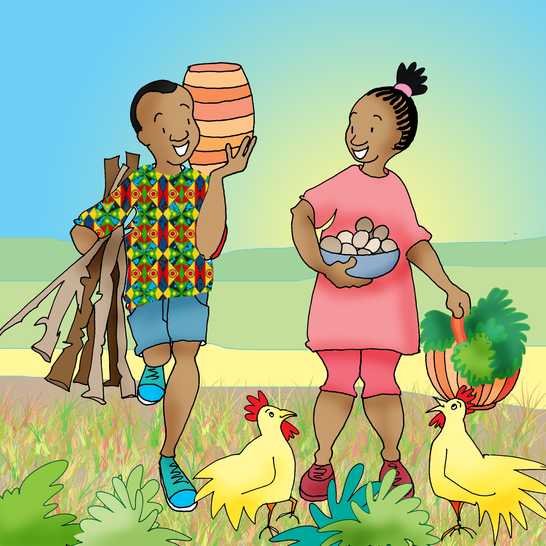
Odongo ni Apiyo batusa bo kukwaabona kwa misebezi ya mwa lapa. Ba bakela mezi ni kulwalela likota. Neba nopanga mai ali kuhu ni kuyanganga miloho mwa simu.
Odongo and Apiyo helped their grandmother with household chores. They fetched water and firewood. They collected eggs from the chickens and picked greens from the garden.
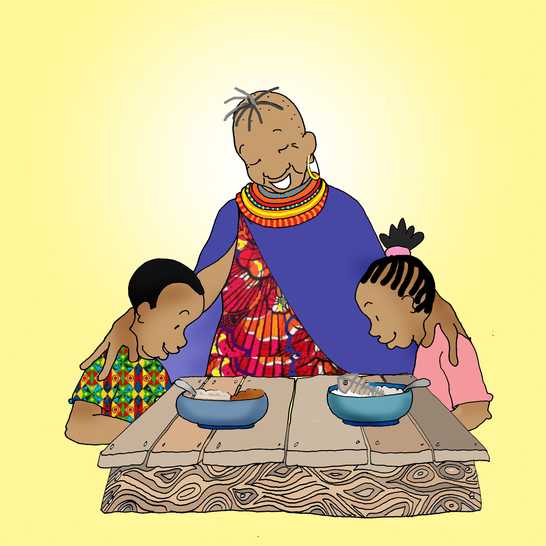
Nyar-Kanyada aluta baikulyae kusoka buhobe bwakucisa ni mulo. Nimwakutatehela laisi ya kucisa ni litapi zakubesa.
Nyar-Kanyada taught her grandchildren to make soft ugali to eat with stew. She showed them how to make coconut rice to eat with roast fish.
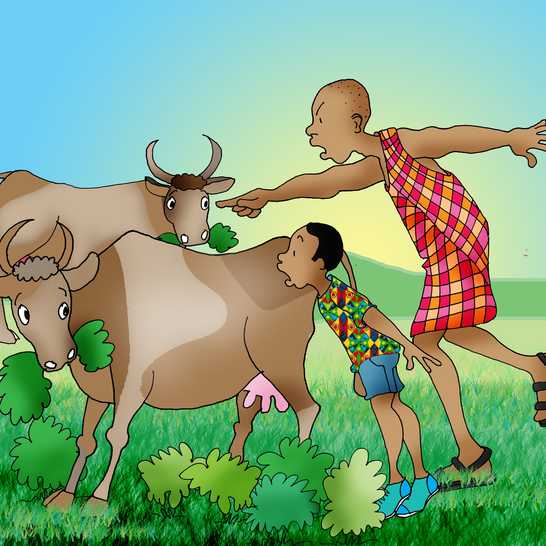
One morning, Odongo took his grandmother’s cows to graze. They ran onto a neighbour’s farm.
The farmer was angry with Odongo. He threatened to keep the cows for eating his crops. After that day, the boy made sure that the cows did not get into trouble again.
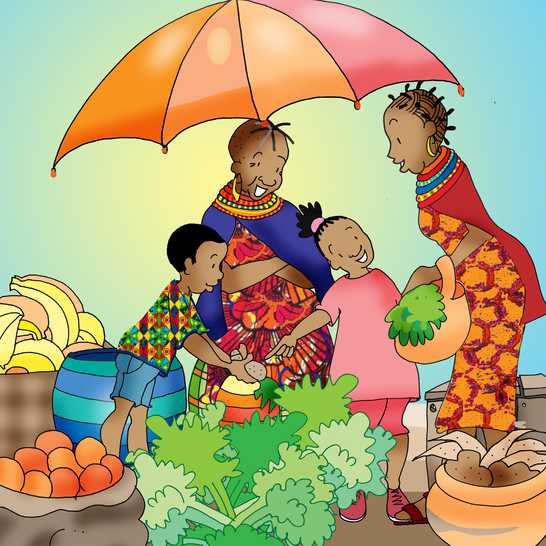
Lizazi leliñwi hape, banana baya kwa musika hamoho ni bo Nyar-Kanyada. Nebanani sintolo-nyana monebalekisezanga miloho, swikili ni mulola. Apiyo natabelanga hahulu kubulelelanga batu liteko zalika za mwa sintolo. Odongo yena nalongelanga lika batu benabaleka.
On another day, the children went to the marketplace with Nyar-Kanyada. She had a stall selling vegetables, sugar and soap.
Apiyo liked to tell customers the price of items. Odongo would pack the items that customers bought.
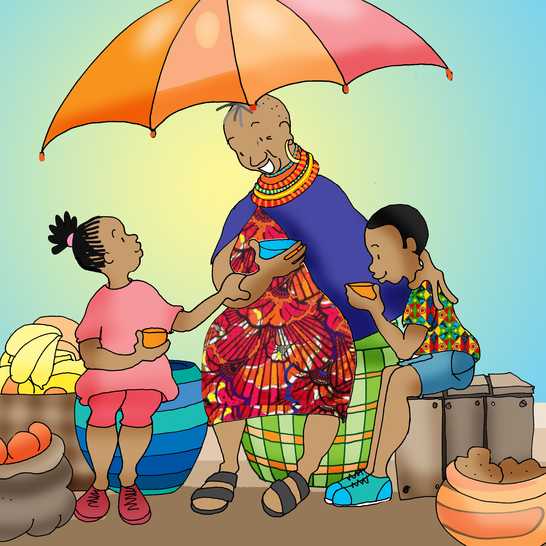
At the end of the day they drank chai tea together. They helped grandmother to count the money she earned.
Kono kanakonyana, mazazi a pumulo afeela mi banana nebanani kukutela kwa tolopo. Bo Nyar-Kanyada bafa Odongo mpo ya kuwani mi Apiyo yena bamufa sweta. Babalongela lico za kucela mwa musipili.
But too soon the holidays were over and the children had to go back to the city.
Nyar-Kanyada gave Odongo a cap and Apiyo a sweater. She packed food for their journey.
Bo ndataabona hane batobaanga, banana nebasalati kukutela kwa tolopo. Bakupa bo kukwaabona kuli baye ni bona kwa tolopo. Bamenya ni kubulela kuli, “Nihulile hahulu, hanikoni kupila mwa tolopo, nika milibelela kufitela mukatonipotela hape.”
When their father came to fetch them, they did not want to leave. The children begged Nyar-Kanyada to go with them to the city.
She smiled and said, “I am too old for the city. I will be waiting for you to come to my village again.”
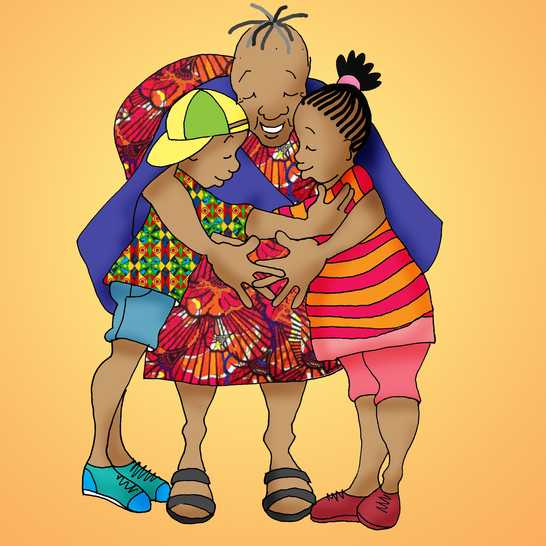
Odongo ni Apiyo bai kumbata nibo kukwaabona ni kubalaeza.
Odongo and Apiyo both hugged her tightly and said goodbye.
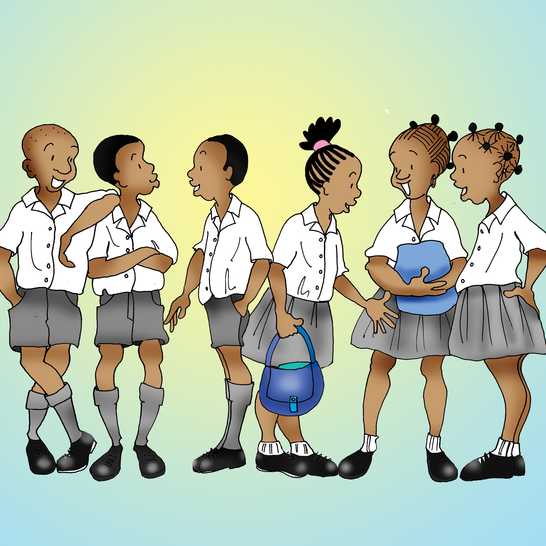
Hane bafitile kwa sikolo, Odongo ni Apiyo bakandekela balikani babona za bupilo bwa kwa hae. Banana babañwi nebaikutwa kuli bupilo bwa mwa tolopo kibobunde kufita bwa kwa hae. Babañwi nebaikutwa kuli bupilo bwa mwa hae bwafita bwa mwa tolopo. Kono zenetabisa kaufela neeli kuli, mañi ni mañi kaufela nalumela kuli Odongo ni Apiyo nebanani bo kukwabona ba bamakaza.
When Odongo and Apiyo went back to school they told their friends about life in the village. Some children felt that life in the city was good. Others felt that the village was better.
But most of all, everyone agreed that Odongo and Apiyo had a wonderful grandmother!


 Violet Otieno
 Catherine Groenewald
 Limbali Muyendekwa
 SiLozi (Zambia)
 Level 4
 The audio for this story is currently not available.