Simbegwires îs ge ǁō, os ge kaise ge ǃoa. ǁÎs dadab ge gere dītsâ ǁîsa kōǃgâsa. Ause, ra ge ge ǁkhāǁkhāsen khîse hâsa, ǁîs mamas ose. Mâǁgoas hoasa ra ge tsēsa nû tsî gere aihomi. Mâ ǃoes ra ge ǃuiûsa ǀguiba gere aihomi. Xawana ra gere ǁātoa, ob ge Simbegwires dadaba skolsîsenni ǀkhā gere huisi.
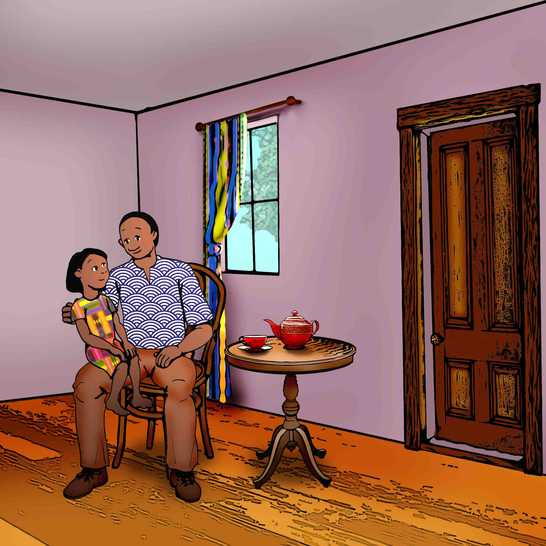
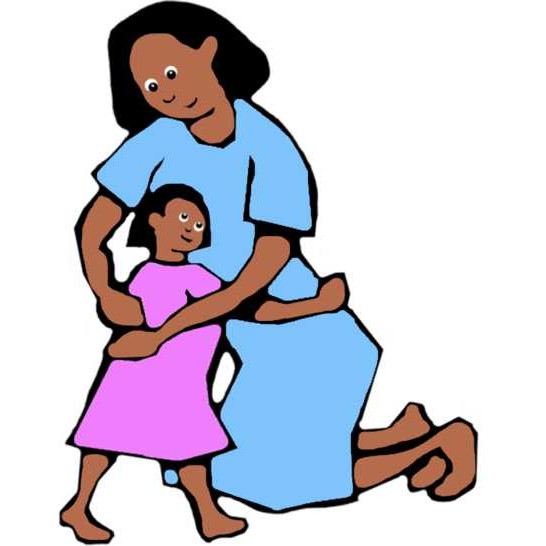
When Simbegwire’s mother died,
she was very sad. Simbegwire’s
father did his best to take care of
his daughter. Slowly, they learned
to feel happy again, without
Simbegwire’s mother.
Every morning they sat and talked
about the day ahead. Every evening
they made dinner together. After
they washed the dishes,
Simbegwire’s father helped her with
homework.
ǀGuitsēb ge Simbegwires dadaba ǁnaetihesas xa ǃonkhao hâse ge oaǀkhī. “Mâpas hâ ti ôarose?” tib ge ra gai. ǁÎs ge ǁîs îba ǃoa ra ǃkhoe. Dadasab ǀnî kaikhoesa ǃkhōǁôa hâ ǃkhaisas ra mû os ge ra mâ. “ǀŌ-aisa khoe-es nî angu-ū ǃkhaisa ta ge hâba hâ, ti ôase. Nēs ge Anitasa” tib ge ǀnom rase ra mî.
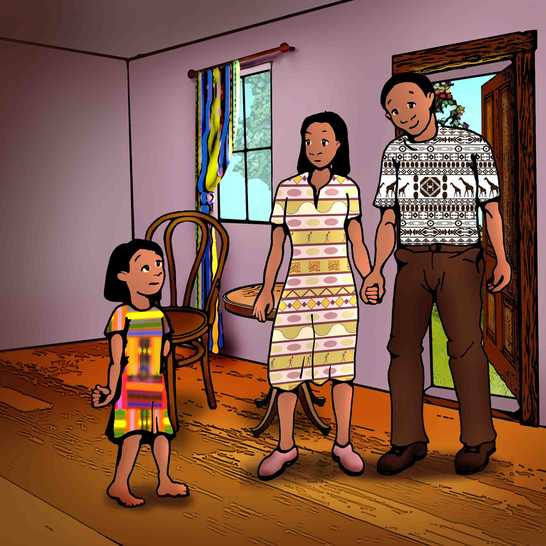
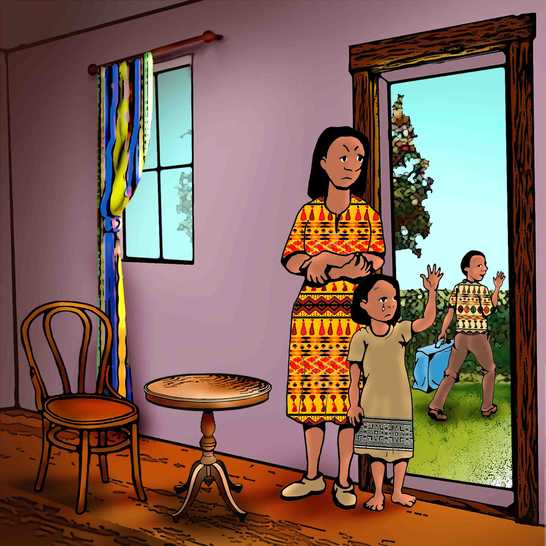
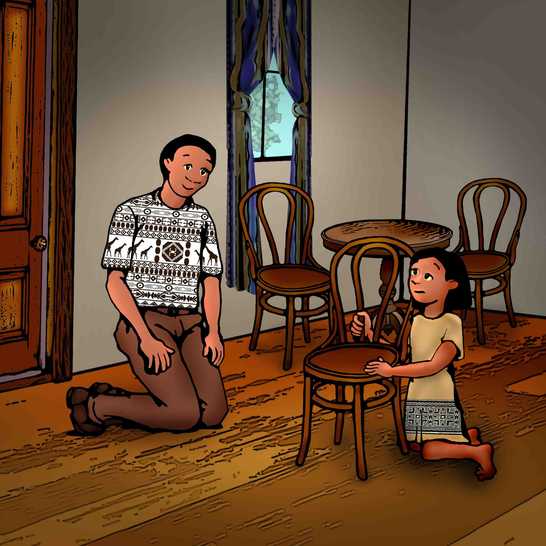
One day, Simbegwire’s father came
home later than usual. “Where are
you my child?” he called.
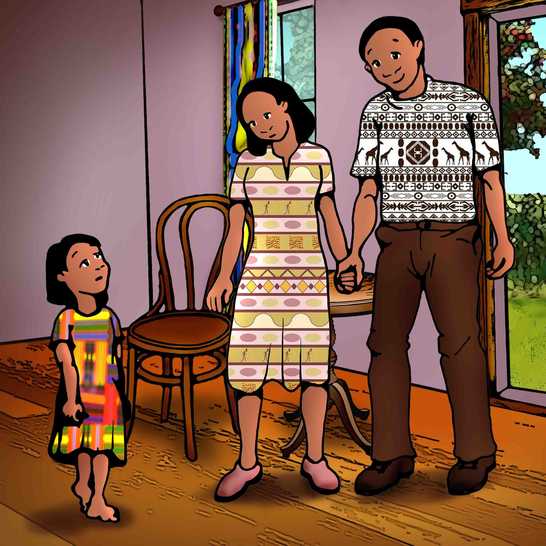
Simbegwire ran to her father. She
stopped still when she saw that he
was holding a woman’s hand. “I
want you to meet someone special,
my child. This is Anita,” he said
smiling.
“Mâtisa Simbegwirese, sa dadab ge sas xa guina go ǁgamba te” tis ge Anitasa ra mî. Xawes ge ǁîsa ǀnom tama i tsî axas ǃommi tsîna ge ū tama hâ i. ǀGôas dadab ge kaise khî tsî ge re hoe. ǁÎb ge ǁî ǃnonan nî ǀguiba ûiǁare ǀgaus, tsî mâtib ûiba nî ǃgâi ǀgaus xa gere ǃhoa. “Ti ôarose, tita ge ra ǁkhore Anitasas sa mamas axase nî ǃkhōǃoasa” tib ge ra mî.
“Hello Simbegwire, your father told
me a lot about you,” said Anita. But
she did not smile or take the girl’s
hand.
Simbegwire’s father was happy and
excited. He talked about the three
of them living together, and how
good their life would be. “My child, I
hope you will accept Anita as your
mother,” he said.
Simbegwires ûib ge ra dawa. ǁÎs ge ǁaubexa ǁae i tsîna hō tama ra ī dadasab ǀkhā ǁgoagade nûsa. Anitas ge kaise gui ǁgâusîsenga ra māsi tsaub xas skolsîsen-e dīhō tama ra īs kōse. ǃOeûs khoaǃgâs ge ǁîsa kharoba ǃoa ǀgui ra ǃgû. Hoarahūs ǁkhaegaos ge guiǀûxa nams ǁîs mamas xas ge māhe hâ īsa. ǁÎs dadab ǃkhās tsîna ge dī tama hâ i ôasas a khîoǃnâ ǃkhaisa.
Simbegwire’s life changed. She no
longer had time to sit with her
father in the mornings. Anita gave
her so many household chores that
she was too tired to do her school
work in the evenings. She went
straight to bed after dinner.
Her only comfort was the colourful
blanket her mother gave her.
Simbegwire’s father did not seem to
notice that his daughter was
unhappy.
ǁKhâroga ǃkharu tsî, ob ge ǁîs dadaba ra mîba ra ǁîb omsa xū nǀkhai ǃkhaisa. “Sîsenni ǀkhā ta ge ra ǃnarioa”, tib ge ra mî. “An ta ge a kōǃgâgu ro nîsa.” Simbegwires ais ge ra ǁnā, xaweb ge dadasaba mûs tsîna hî tama ra i. Anitas ge xū-i tsîna khom taama. ǁÎs tsîn ge ra khîoǃnâ.
After a few months, Simbegwire’s
father told them that he would be
away from home for a while. “I have
to travel for my job,” he said. “But I
know you will look after each other.”
Simbegwire’s face fell, but her
father did not notice. Anita did not
say anything. She was not happy
either.
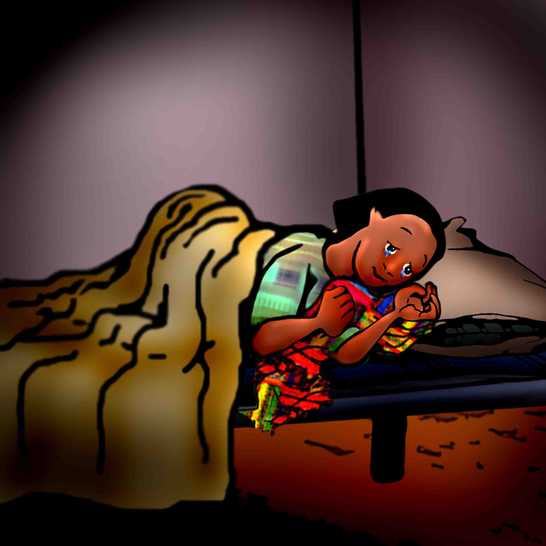
Xūn ge ra ǁgaonûba Simbegwiresa. Omsîsengas ga toa tama i, tamas ka ios ga ǁao-amsen, os ge Anitasa ra nausi. Tsî ûǁaeb ais ge tarasa ǃnāsa û-e ra û, Simbegwiresa omaron ǀguina ra ǃgaubase. Mâ ǃuis hoasas ge ra āǁomǁomsen, ǁîs îs xas ge māhe namsa ǁnamgā hâse.
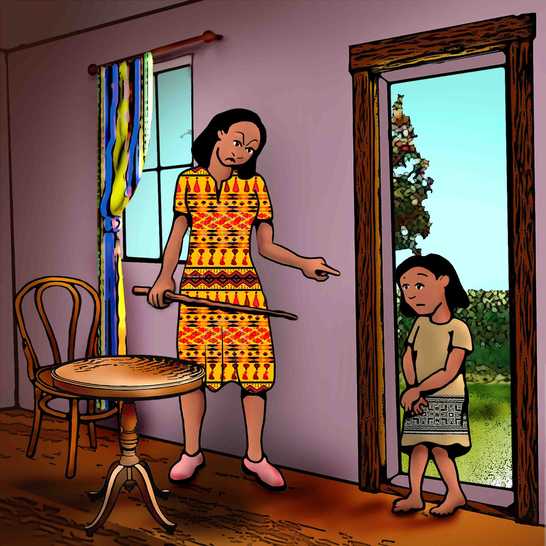
Things got worse for Simbegwire. If
she didn’t finish her chores, or she
complained, Anita hit her. And at
dinner, the woman ate most of the
food, leaving Simbegwire with only
a few scraps.
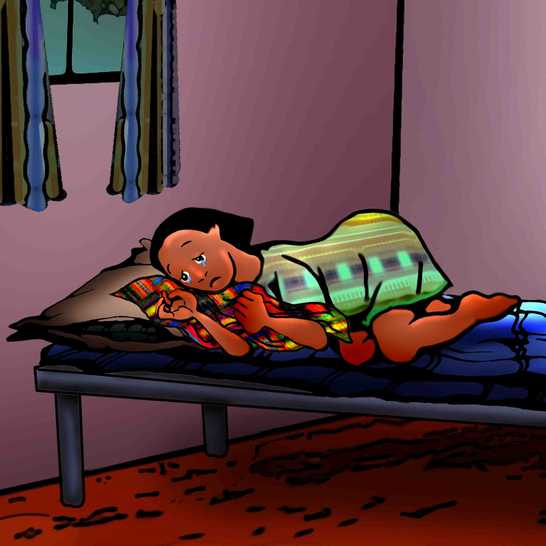
Each night Simbegwire cried herself
to sleep, hugging her mother’s
blanket.
ǀGuitsēkamǁgoa îs ge Simbegwiresa ǃonkhao hâse kharob ǃnâ ra ǀhao-ūhe. “Sa ǀopesa axase!” Tis ge Anitasa ra ǃau. ǁÎs ge Simbegwiresa goana xū ra ǃkharaui. Nē ǀō-aisa nams âs ge ǀā xū-i ai ra ǁkau, tsî ǀgam ǃâra ǃnâ ra doaǃā.
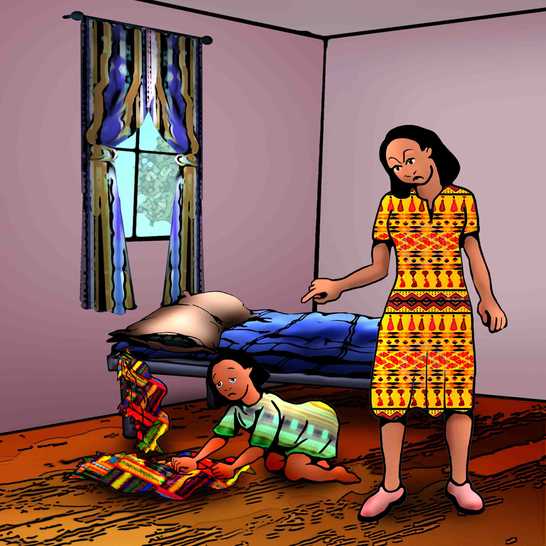
One morning, Simbegwire was late
getting out of bed. “You lazy girl!”
Anita shouted. She pulled
Simbegwire out of bed. The
precious blanket caught on a nail,
and tore in two.
Simbegwires ge kaise tsûagao. ǁÎs ge ge mîǁgui ǁgâusa xū ǃkhoebēsa. ǁÎs ge nē nams mamasas xas ge māhe hâ îs ǃân, ûn ǀhaminǀkhā, tsî ǁgâusa xū ra ǃgû. ǁÎs ge dadasab ge ǃgû daoba ra sao-ai.
Simbegwire was very upset. She
decided to run away from home.
She took the pieces of her mother’s
blanket, packed some food, and left
the house. She followed the road
her father had taken.
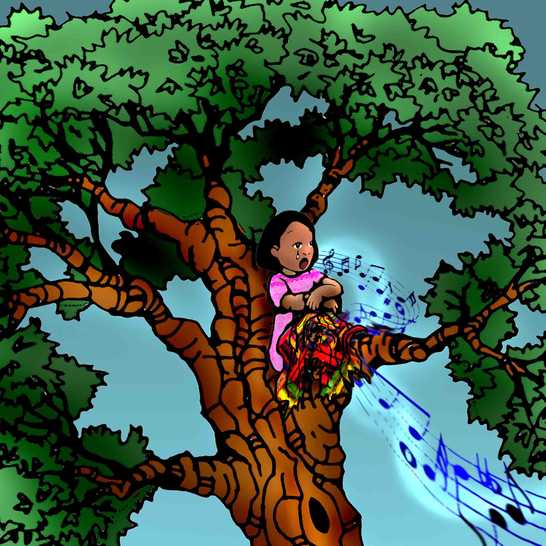
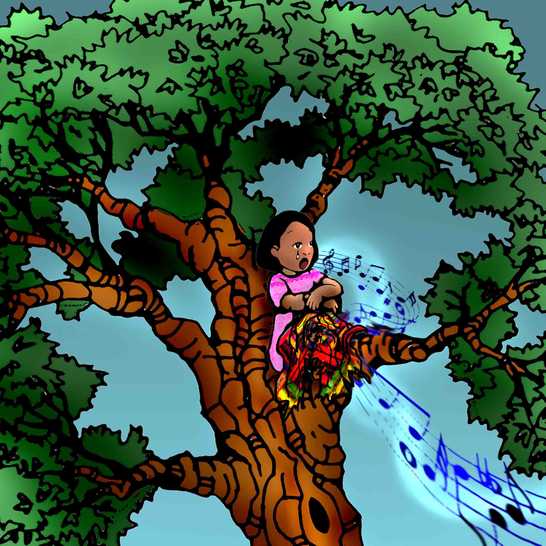
ǃUi i ge os ge ǃāb amǃgâ mâ ǀgapi hais ǃnâ haro tsî hais gonagu ǃnâ kharoba kurubasen. ǁOms ra khamis ge ra ǀnae: “Mamase, mamase, mamase, ǁnāxū tes gege. ǁNāxū tes ge oaǀkhī tamas hâ. Dadab tsîn gege ǀnamǀûte. Mamase, mâǁaes ra oaǀkhī? ǁNāxūtes gege.”
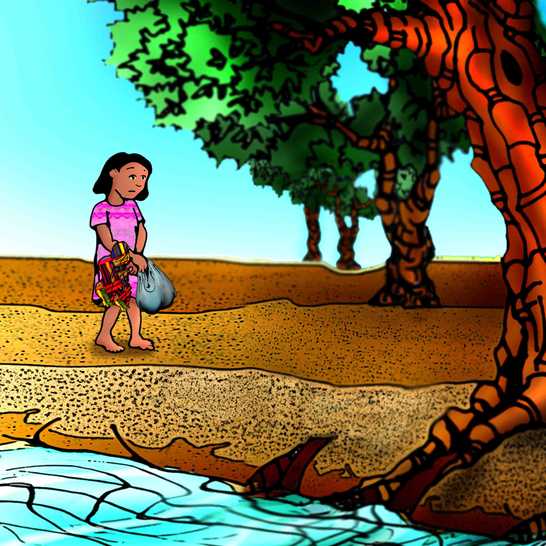
When it came to evening, she
climbed a tall tree near a stream
and made a bed for herself in the
branches.
As she went to sleep, she sang:
“Maama, maama, maama, you left
me.
You left me and never came back.
Father doesn’t love me anymore.
Mother, when are you coming back?
You left me.”
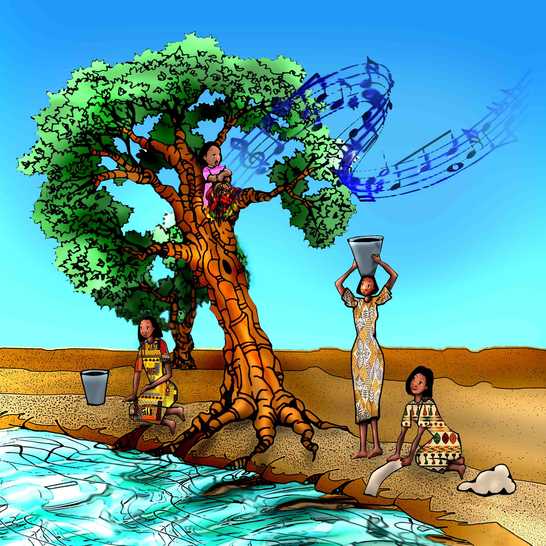
Sao ra ǁgoagas ais ge ǁîsa ǁkhawa ǁnā amsa gere ǁnae. Kaikhoedi hîa sarana ǃāb tawa ge ǁāǃgû di ge nē ǃoaxa amsa ǀgapi haisa xūs ra ǀō ǃkhaisa ra ǁnâu. ǁÎdi ge oab ranapoga ǀōǀō ǀgaus ti ge âi, tsî ǁîdi sîsenni ǀkhā ge aiǃgû. Xawes ge ǀgui tarasa ōrisase amsa ge ǃgâǃgâ.
The next morning, Simbegwire sang
the song again. When the women
came to wash their clothes at the
stream, they heard the sad song
coming from the tall tree.
They thought it was only the wind
rustling the leaves, and carried on
with their work. But one of the
women listened very carefully to
the song.
Nē taras ge hais ǃnâ ra kōkhâi. Axas tsî doa hâ ǃkharagau ǀûga-î nams ǃân tsînas ra mû , os ge Simbegwire, ti ǃgâb ôase ti ra ā. Nau taradi on ge ǁāǀû tsî ǁîsa ra hui haisa xū ǁgôaxas ǀkhā. Mikisas ge ǁnamgāsi tsî ra ǁkhaegaosi tsâ.
This woman looked up into the tree.
When she saw the girl and the
pieces of colourful blanket, she
cried, “Simbegwire, my brother’s
child!”
The other women stopped washing
and helped Simbegwire to climb
down from the tree. Her aunt
hugged the little girl and tried to
comfort her.
Mikisas ge Simbegwiresa oms âs ǁga ra oa-ū. ǁÎs ge ǀgamsa û-e māsi, tsî goanǃnâ ǁîs îs doa hâ nams ǀkhā ananǃgâ. ǁNā ǃuias ge Simbegwiresa ǁomǃgûs rase ra ā. Xawe nē gu ge dâb ǁgamroga. ǁÎs a ans ge mikisas nî kōǃgâsi ǃkhaisa.
Simbegwire’s aunt took the child to
her own house. She gave
Simbegwire warm food, and tucked
her in bed with her mother’s
blanket.
That night, Simbegwire cried as she
went to sleep. But they were tears
of relief. She knew her aunt would
look after her.
Simbegwires dadab ge oasīb ge o, ǁîs ǁomǃnâǃnā-omsa ǀkhaiǃnâse ra hō. “Tare-e go hā, Anitase?” tib ge kaise ǃgom gaob ǀkhā ra dî. Taras ge ra mîǃābabi tsâ Simbegweres ge ǃkhoebēsa. “Tita ge ǁîs xa ra ǃgôahe gao”, tis ge ra mî. “Xawe ta ge tsâbe kaise ǁkhōse ge hâ-ūsi” Simbegwires dadab ge omsa xu oa tsî ǃāb ǀkhāb ǁga ra ǃgû. Tsîb ge ǁîb ǃgâsas ra hâ-ai ǃgaroǃās ǁga ra danadana ǀgôas âb tsâbe ǁnāba sī tama ǃkhaisa anuis ǃaroma.
When Simbegwire’s father returned
home, he found her room empty.
“What happened, Anita?” he asked
with a heavy heart. The woman
explained that Simbegwire had run
away. “I wanted her to respect me,”
she said. “But perhaps I was too
strict.”
Simbegwire’s father left the house
and went in the direction of the
stream. He continued to his sister’s
village to find out if she had seen
Simbegwire.
Simbegwires ge nau ǀgôan ǀkhās ra ǀhuru hîna ǁîs dadaba ra mûǃgoaxa. ǃAos ge gere ǁîb tsâse nî ǁaixa ti, os ge oms ǃnâ ǃkhoegâ tsî sī ra sâsen. Xaweb ge dadasaba ǁîsa ǃoa ī tsî ra mîba si, “Simbegwerese, ǃgâi mamasasas ge go hōbasen. ǁNās hîna a ǀnam tsî ra ǁnâǃāsisa.” ǁÎra gera ǁnâugu îs Simbegwiresa mikisas tawa hâ gaos hâs kōse.
Simbegwire was playing with her
cousins when she saw her father
from far away. She was scared he
might be angry, so she ran inside
the house to hide.
But her father went to her and said,
“Simbegwire, you have found a
perfect mother for yourself. One
who loves you and understands
you. I am proud of you and I love
you.”
They agreed that Simbegwire would
stay with her aunt as long as she
wanted to.
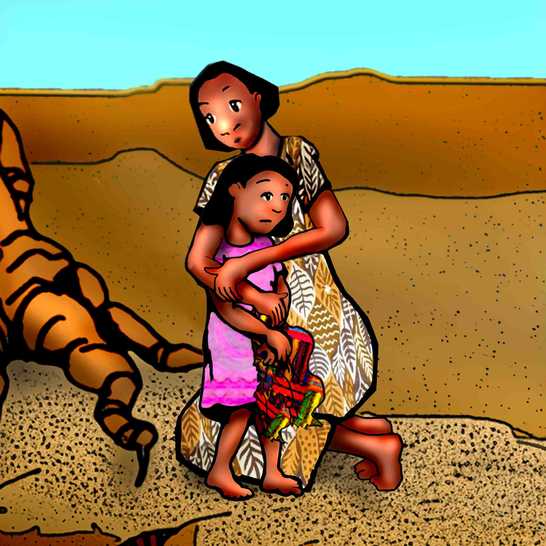
Dadasab ge mâtsēs hoasa gere sarisi. Anitas ǀkhāb ge sīs kōse. ǁÎs ge Simbegwires ǃomma ra ǃkhō gaose. “ǀÛbate re kharirose, hanu tamase ta ge go dī,” tis ge ra ā. “Mā-amtes nî ǁkhawa dītsâsa?” Simbegwires ge dadasab tsî ǁîb khîoǃnâ aisa ǃoa ra kō. Aisǁga dāǀgū tsîs ge ause Anitasa ra ǁnamgā.
Her father visited her every day.
Eventually, he came with Anita. She
reached out for Simbegwire’s hand.
“I’m so sorry little one, I was
wrong,” she cried. “Will you let me
try again?”
Simbegwire looked at her father
and his worried face. Then she
stepped forward slowly and put her
arms around Anita.
Sao ra wekhēs ge Anitasa Simbegwires, mikisas tsî ǀgôan tsîna ûǁares ǃaroma ra ǁkhauui. ǁÂudīb ûsa! Anitas ge Simbegwires ǁkhoaxabahe ûn hoaragana ge aihomi, tsîn ge hoana ge û ǁân nîs kōse. ǁNāpaxūn ge ǀgôana ge ǀhuruǃgû kaikhoen ra ǁgam hîna. Simbegwires ge khî tsî ǃgari-aose gere tsâsen. ǁÎs ge ra mîǁgui ǀgūǁaes nî oms tawa oasī, dadasab tsî ôaǃgâǁgûs ǀkhā ǁansa.
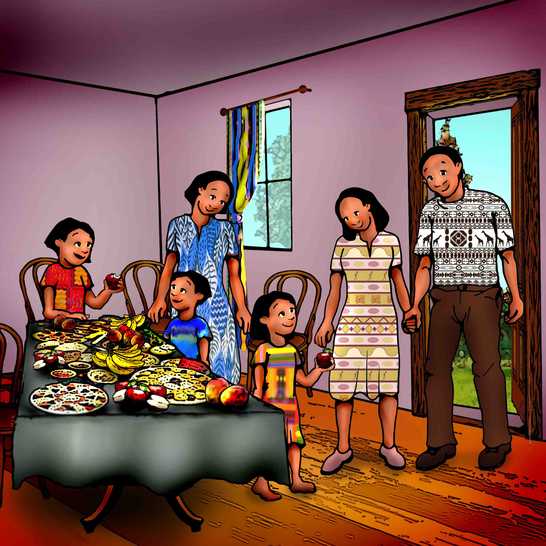
The next week, Anita invited
Simbegwire, with her cousins and
aunt, to the house for a meal. What
a feast! Anita prepared all of
Simbegwire’s favourite foods, and
everyone ate until they were full.
Then the children played while the
adults talked.
Simbegwire felt happy and brave.
She decided that soon, very soon,
she would return home to live with
her father and her stepmother.


 Rukia Nantale
 Benjamin Mitchley
 Maureen Merley So-Oabes
 Khoekhoegowab
 Level 5
 The audio for this story is currently not available.