ǃKhō-unuhe gu ra omde xu ǃnūse,gu ge ǃnans ǃganǀgôaga ǀhomaxa danaǃās Nairobis dis ǃnâ ǁan hâ. Mâ tsēs hoasa gu ge ǀkhīs ra khami ra ū. ǀGui ǁgoaga gu ge nē axaga ǁîgu di ǂgoade gere ǁguibē,ǃkhai ǀnūǃgûǃgani ai gu ge ǁomǂkhais khaoǃgâ. ǃKhaiǂkhai gu ge xui-ao gere ǀawon ǀkha ǀaesa khau. Magozweb ge nē axagu ǀkha ge hâ i. ǁÎb ge axagu ǃnâ ge ǂkham i.
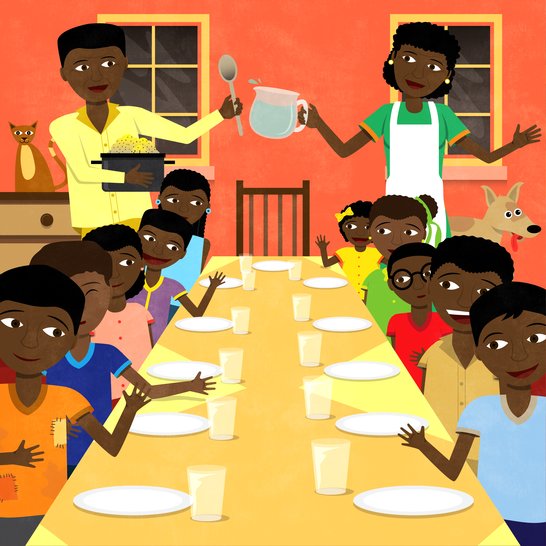
In the busy city of Nairobi, far away from a caring life at home, lived a group of homeless boys. They welcomed each day just as it came.
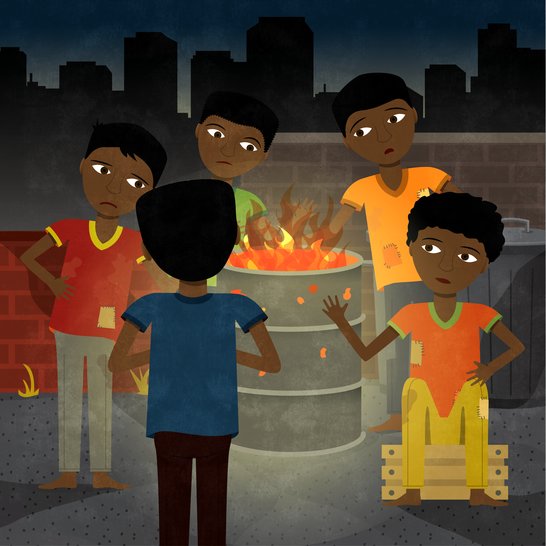
On one morning, the boys were packing their mats after sleeping on cold pavements. To chase away the cold they lit a fire with rubbish.
Among the group of boys was Magozwe. He was the youngest.
Magozweb ge ǁîb îra xa ǁō xū-e,ob ge ge koro kurixa i. ǁÎb omeb oms tawab ge ge si hâ. Nē aob ge axaba ǃgâise ge ǃkhō-unu tama hâ i. Magozwebab ge ǂauna ǂûna ge au tama hâ i. ǁÎb ge axaba kaise ǃgom sîsenna gere dī kai.
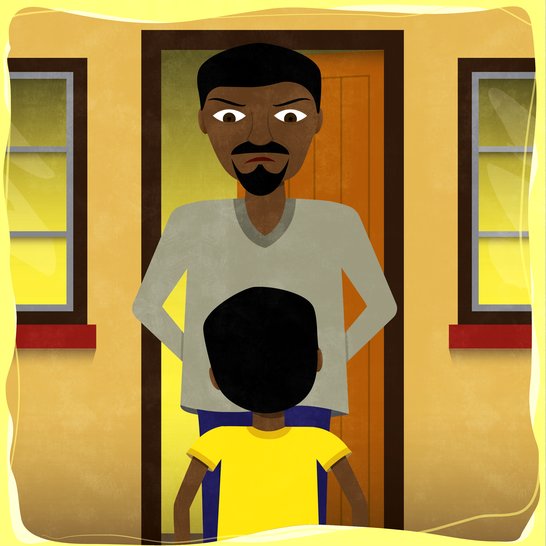
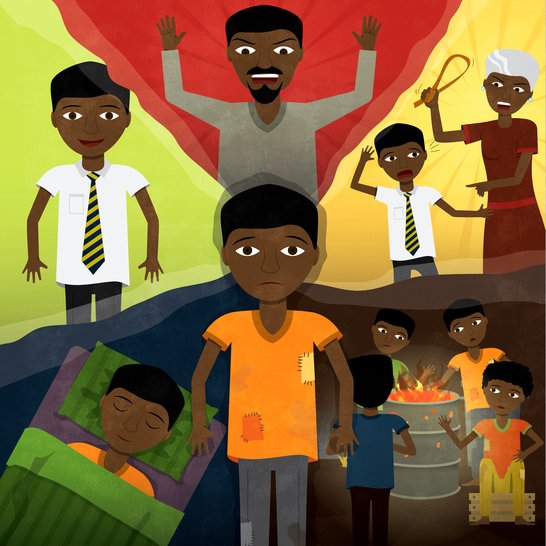
When Magozwe’s parents died, he was only five years old. He went to live with his uncle. This man did not care about the child. He did not give Magozwe enough food. He made the boy do a lot of hard work.
Magozweb ga nēs ǂama ǃgaesen tsî dîna dîbi,ob ge omeba gere ǂnaubi. Magozweb ga skoli ǁgab ra ǃgû ǂgao ǃkhaisa mîba bi,ob ge omeba ǂnaubi tsî ra mî,” Kaisets gâre,xū-e ǁkhāǁkhāsens ǃaroma,” timi. Omeb gere ûi-ūbi ǀgaus xab ge Magozweba, ǃnona kurigu khaoǃgâ omeb omsa xu ge ǃkhoebē. ǁÎb ge ge ǃganǀgôa kai.
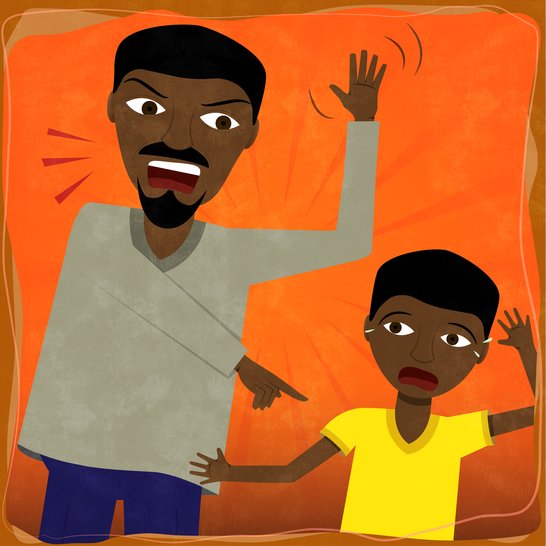
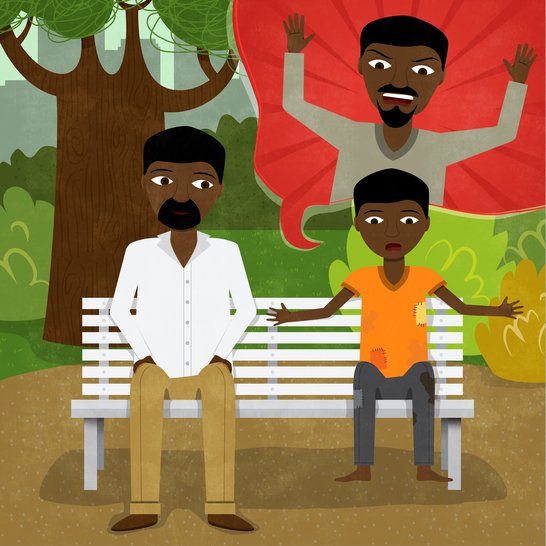
If Magozwe complained or questioned, his uncle beat him. When Magozwe asked if he could go to school, his uncle beat him and said, “You’re too stupid to learn anything.”
After three years of this treatment Magozwe ran away from his uncle. He started living on the street.
ǃGanǀgôasis ge kaise ge ǃgom i, xui-ao gu ge ǃnāsa axaga tsēs hoasa ǂû-e hōs ǀkha gere ǃgomma tsâ. ǀNî ǃnāde gu ge axaga ǀawaǃnamgu xa ǃkhōhe,tsî ǁkhāti gere ǂnauhe. ǀAesen gu ga, o gu ge ǀgui khoe-i xas tsîna ge huihe tama hâ i. ǁÎgu ge ǀkhowemâ tsî plastikna gu gere ǁamaxū tsî hōǂgā marisa xu ǀgui gere ûi. Ûib hâgu ge nau mâǃoara ǃnandi ǃganǀgôagu xa gere ǃgomǃgomhe.Nē axagu ǁîga gere ǃkhamū tsî danaǃās di hoa ǃâgu di ǀhonkhoe ǂgao xui-ao.
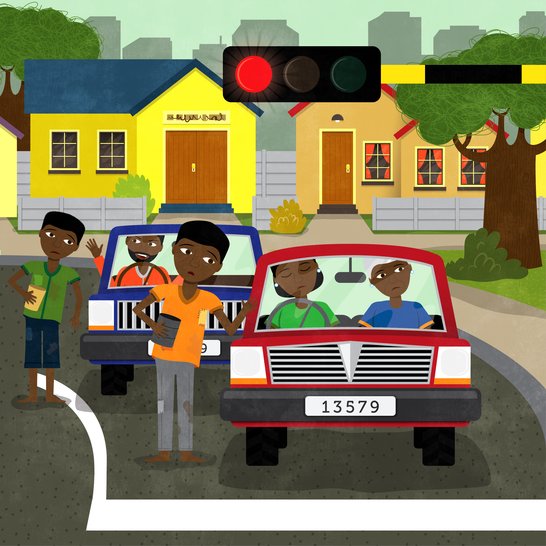
Street life was difficult and most of the boys struggled daily just to get food. Sometimes they were arrested, sometimes they were beaten. When they were sick, there was no one to help.
The group depended on the little money they got from begging, and from selling plastics and other recycling.
Life was even more difficult because of fights with rival groups who wanted control of parts of the city.
ǀGuitsēb ra Magozweba ǀapon xawagu ǃnâ ra ǁhoaramâ,hîab ge ǀoro ǁgaeǂhôa khomaiǂkhani-e ra hō. ǂKhanisa ǃanube ǀkha tsîb ge ǁgarub ǃnâ ge ǂgā. Mâ tsēs hoasab ge ǂkhanisa ūǂui tsî ai-īsirogu ǁga ra kō. Mîdeb nî khomai ǀgausab ge ge ǀū i.
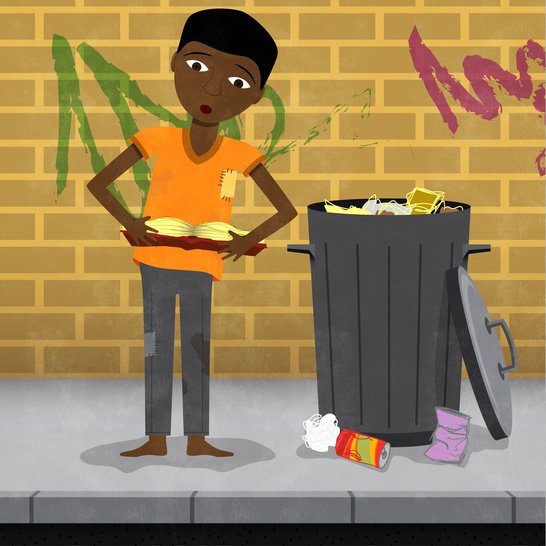
One day while Magozwe was looking through the dustbins, he found an old tattered storybook. He cleaned the dirt from it and put it in his sack.
Every day after that he would take out the book and look at the pictures. He did not know how to read the words.
Nē ai-īsirogu ge anikuniǁkhana-ao kai ge axab ǁgaeǂhôasa ra ǁgau. Anikuniǁkhana-aosis xab ge Magozweba ra ǁhapo.ǀNî tsēdeb ge ǁîba ra mûnanaisen ǁîb a nē ǁgaeǂhôas ǃnâ hâ axa ti.
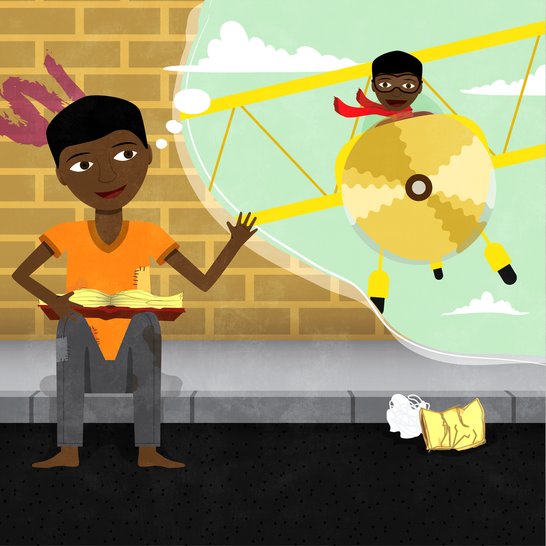
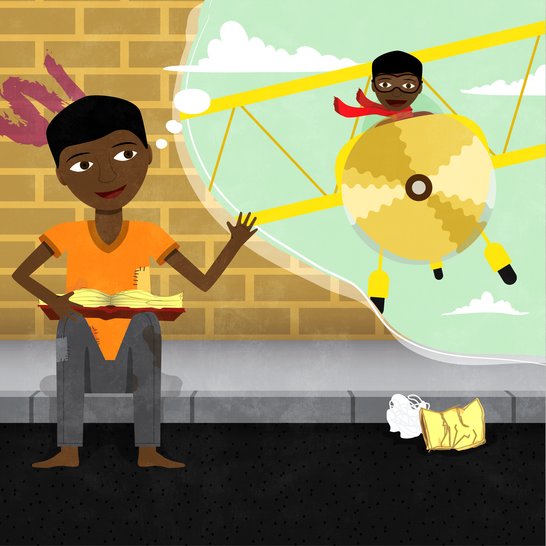
The pictures told the story of a boy who grew up to be a pilot.
Magozwe would daydream of being a pilot. Sometimes, he imagined that he was the boy in the story.
ǃKhaib ǃnâb ge Magozweba ǃgani ǃnâ mâ tsî gere ǀkhowe. Ao-i ge ǁîb tawa ge ǃgûsi.” ǃGâitsēs, tita ge Thomab ti ǀon hâ. Nēba ta ge ǀgūse ra sîsen, ǂûǁamaxū ǁgâus tawa,” tib ge nē aoba ra mî. ǁÎb ge ǃhuni oms, ǀawa ǂamǃnâba ūhâs ǁga ra ǁnae. “ǂGomǃgâ ta ge ra ,ǁnapa sī tsîts ǂûxū-e nî si hōbasensa” tib ge ra mî. Aoba kō, omsa kō tsîb ge Magozweba “ǂGao ta ka o,” ti ǃeream tsî ra ǃgûbē.
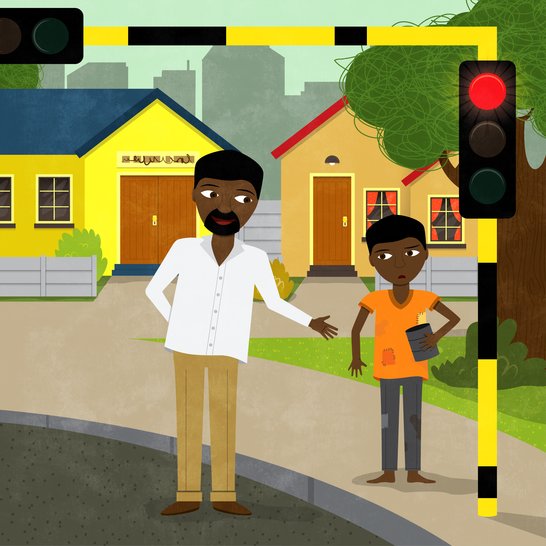
It was cold and Magozwe was standing on the road begging. A man walked up to him. “Hello, I’m Thomas. I work near here, at a place where you can get something to eat,” said the man.
He pointed to a yellow house with a blue roof. “I hope you will go there to get some food?” he asked.
Magozwe looked at the man, and then at the house. “Maybe,” he said, and walked away.
ǁKhâgu ǃkharu hâse gu ge ǃganǀgôagaǀ Thomaba ra mûmâ. ǁÎb ge khoen ǀkha ǁgams xa ge ǃgâibahe i, ǃgōsase ǃganǀgôan ǀkha. Thomab ge khoen di ûibǁgaeǂhôan ǁga gere ǃgâ. ǁÎb ge ge taniǀnamxa-i, tātsē ǂū-o tama i ti ge ī i. ǀNî axagu ge nē ǃhuni tsî ǂhoa oms ǁga tsēs hoasa ge ǃgû tsoatsoa, tsēǃgâǁaeb ǂû-e hōs ǃaroma.
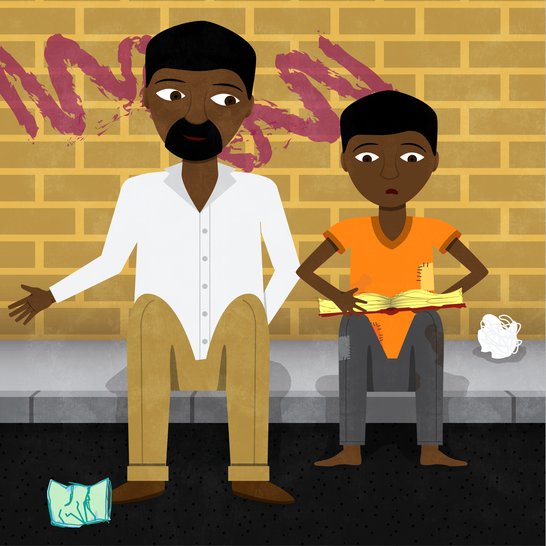
Over the months that followed, the homeless boys got used to seeing Thomas around. He liked to talk to people, especially people living on the streets.
Thomas listened to the stories of people’s lives. He was serious and patient, never rude or disrespectful. Some of the boys started going to the yellow and blue house to get food at midday.
Magozweb ge ǀnūǃgûǃgani ai ǂnû tsî ai-īsigu ǂkhanis âb ǃnâ gere kō, hîab ge Thomaba ge ǁîb xōǀkhā ge si ǂnû. “Tare-i xa ra ǃgû ǁgaeǂhôasa?” tib ge Thomaba ra dîbi. “Axab hîa ge anikuniǁkhana-ao kaib xa ra ǃgû,” tib ge Magozweba ra ǃereambi.”Mati ǀon hâ axaba?” tib ge Thomaba nē ra dîbi. “ǀŪ ta ge a, khomai ǁoa ta a,” tib ge Magozweba ǂause ra mî.
Magozwe was sitting on the pavement looking at his picture book when Thomas sat down next to him.
“What is the story about?” asked Thomas.
“It’s about a boy who becomes a pilot,” replied Magozwe.
“What’s the boy’s name?” asked Thomas.
“I don’t know, I can’t read,” said Magozwe quietly.
ǁKhawa kha ge ǀhao,ob ge Magozweba ge Thomaba ǁîb ûiǂgaroba ge ǁgamba. Nē ǂhôas ge mâǀgaus aib ǁîb omeb xa gere ûi-ūhe ǃkhais, tsîb ge ǃkhoebē ǃaromas tsîna. Thomab ge xu-e ǃhoaǀaro tama i tsî ǁkhati Magozweba tare-eb nî dīsa mîba tama hâ, xaweb ge kaise ǂorisase gere ǃgâbi.ǀNî ǃnāde kha ge ǂhoa ǂamǃnâba ūhâ oms tawa gere ǁgam, ǂûǁae khara hîa.
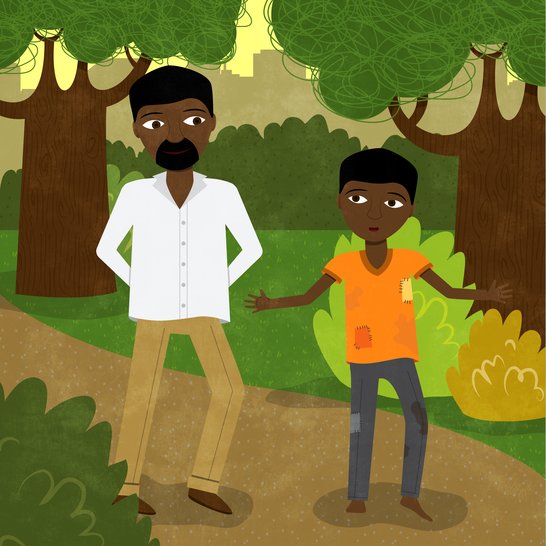
When they met, Magozwe began to tell his own story to Thomas. It was the story of his uncle and why he ran away.
Thomas didn’t talk a lot, and he didn’t tell Magozwe what to do, but he always listened carefully.
Sometimes they would talk while they ate at the house with the blue roof.
Magozweb ge disi kurixa, ob ge Thomaba ǀasa ǁgaeǂhôa ǂkhanisa ge ǀkhaebi. Nē ǂkhanis ge ǃgaroǃā-axab hîa ǂanǂansa ǂaiǃgaiǀhuru-aose ge ǂansa ib xa ra ǃgû. ǂGui ǃnādeb ge Thomaba nē ǁgaeǂhôasa Magozweba gere khomaiba, ǀguitsēb ge mîs kose. ” ǂÂi ta ge ra titan î skolǃgû tsoatsoa tsî khomai nî khomai ǃkhaisa. Mâti tsa ǂâi?” Thomab ge ra mîba bi, ǁîb ǀgôan rah â tsî skolǃgû ǃkhai-e ǂan ti.
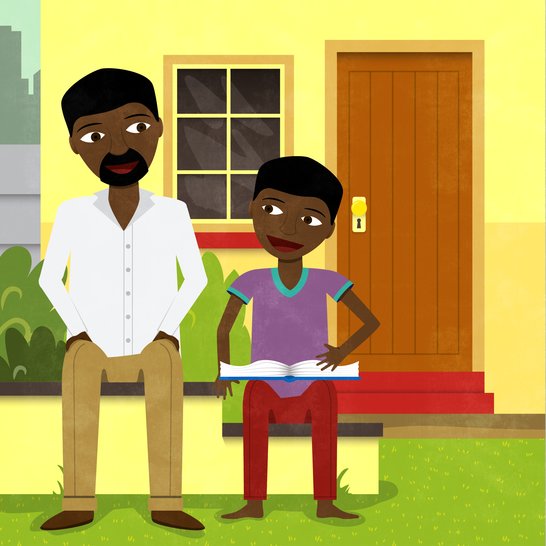
Around Magozwe’s tenth birthday, Thomas gave him a new storybook. It was a story about a village boy who grew up to be a famous soccer player.
Thomas read that story to Magozwe many times, until one day he said, “I think it’s time you went to school and learned to read. What do you think?” Thomas explained that he knew of a place where children could stay, and go to school.
Magozweb ge nē ǀasa hâǃkhaib, tsîb nî ǁîba skolǃgû se i ǃkhais xa ra ǂâi. ǀNîsi i a ama tama hâ, ti omeb ge ǂhanu i ǃkhaisa. Tita ǁkhāǁkhāsens ǃaroma kaise gâre ti? Nē ǀasa hâǃkhaib tawa ta xare ǃkhamūhe tite? ǁÎb ge re ǃao. ” ǃGangu ǃnâ hâmâs ge tsâse a ǃgâi,” tib ge ra ǂâi.
Magozwe thought about this new place, and about going to school. What if his uncle was right and he was too stupid to learn anything?
What if they beat him at this new place? He was afraid. “Maybe it is better to stay living on the street,” he thought.
Thomab ǀkhab ge ǁîb ǃaoba ra ǀgoragu. ǁAe-i khaoǃgâb ge nē aoba ge axaba mîǁawoǁawoba, ǃgâi ûibab nî nē ǀasa hâǃkhaib tawa ūhâ ǃkhaisa.
He shared his fears with Thomas. Over time the man reassured the boy that life could be better at the new place.
ǁNātimib ge Magozweba ǀgam ǀkhara axakha ǀkhab ǁomǃnâǃnā-omsa ra ǀgoragu,oms ǃnâ ge doe-ǂgâ. Hoan ǀhaob ai disi ǀgôan ge nē oms tawa gere hâ. ǁÎn ge mâro Cissys tsî ǁîs aob ,ǃnona arigu, ǀhôas tsî kaira piris tsîn ǀkha ge ǁanǁare hâ i.
And so Magozwe moved into a room in a house with a green roof. He shared the room with two other boys.
Altogether there were ten children living at that house. Along with Auntie Cissy and her husband, three dogs, a cat, and an old goat.
Magozweb ge skola ge ǂgâ tsoatsoa,xawe i ge ge ǃgom i. ǂGui xūnab ge nî sīǃnâse ge ī i. ǁÎb ge skolǂgâsa gere ǀû ǂgao. Xaweb ge ge ǂâihō anikuniǁkhana-aob tsî ǂaiǃgaiǀhuru-aob hâkha xa ra ǃgû ǁgaeǂhôa ǂkhanira xa. ǁÎkha khamib ge ge ǀûsen tama hâ i.
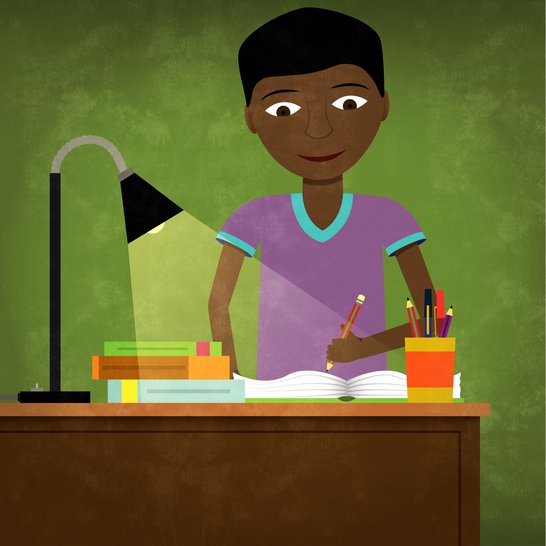
Magozwe started school and it was difficult. He had a lot to catch up. Sometimes he wanted to give up.
But he thought about the pilot and the soccer player in the storybooks. Like them, he did not give up.
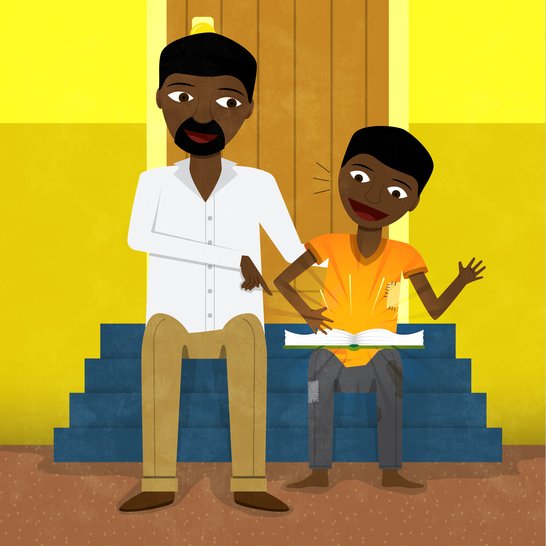
Magozweb ge ǃam ǂamǃnâba ūhâ oms ǃgâb ai, skoli di ǁgaeǂhôa ǂkhanisa gere khomai. Thomab ge ǁîb xōǀkhā ra si ǂnû. “Tare- i xa ra ǃgû ǁgaeǂhôasa?” tib ge Thomaba ra dîbi. ” ǁGauǃnâ-ao kai ǂgao ra axab xa ra ǃgû,”tib ge Magozweba ra ǃeream. “Mati ǀon hâ axaba?” tib ge Thomaba ra dîbi. “ǁÎb ǀons ge a Magozwe,” tib ge Magozweba ǀnom ra se ra ǃereambi.
Magozwe was sitting in the yard at the house with the green roof, reading a storybook from school. Thomas came up and sat next to him.
“What is the story about?” asked Thomas.
“It’s about a boy who becomes a teacher,” replied Magozwe.
“What’s the boy’s name?” asked Thomas.
“His name is Magozwe,” said Magozwe with a smile.


 Lesley Koyi
 Wiehan de Jager
 Ivan Petrus Josob
 Khoekhoegowab
 Level 5
 The audio for this story is currently not available.