Sankimab ge ǁîb îra tsî haka kurixa ǃgâsas tsîn ǀkha ge ǁan hâ i. ǁÎn ge ǃkhū hâ aob ǃās ai gere hâ. ǁÎn di ǀgâ oms ge saogub ǃnâ mâ haidi ǀams ai ge mâ i.
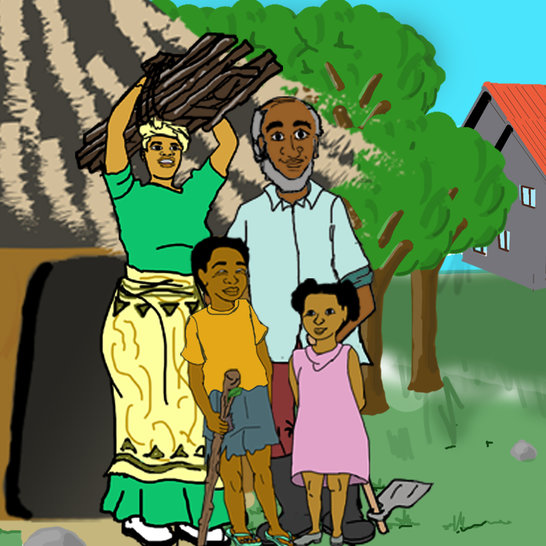
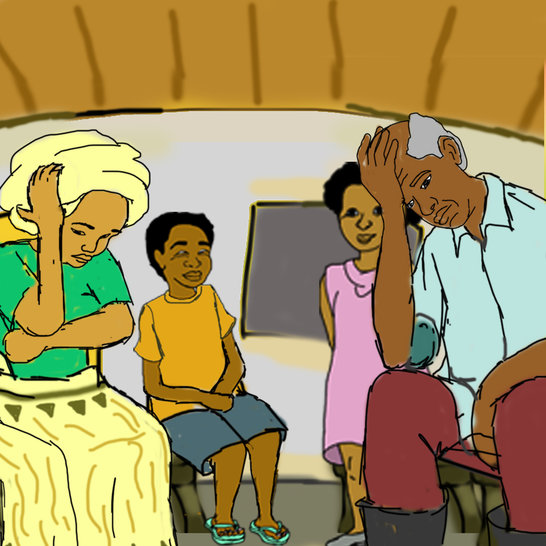
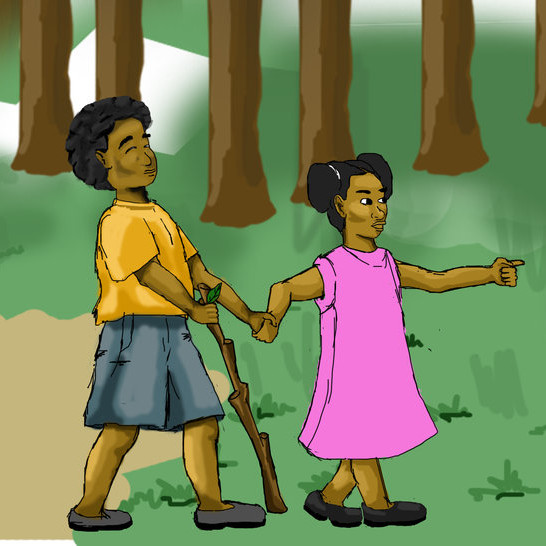
Sakima lived with his parents and his four year old sister.
They lived on a rich man’s land.
Their grass-thatched hut was at the end of a row of trees.
Sankimab ge ǃnona kurixa a hîa ge ǀaesen tsî mûs ǁkhāsîba ge ǂoa ǃnâ. Sankimab ge māsa ge ūhâ i axaba.
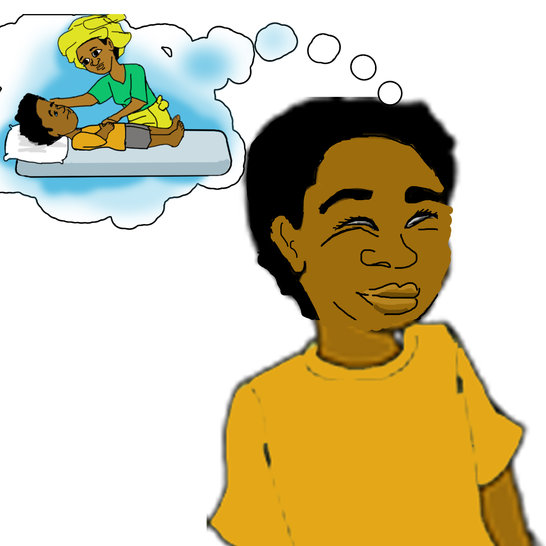
When Sakima was three years old, he fell sick and lost his sight.
Sakima was a talented boy.
Sankimab ge ǂgui xūna gere dī nau ǃnâ î kurixa ǀgôan dī tamana. Aiǁgause, ǁîb ge kai hâ khoen ǃās di ǀkha ǂnû tsî ǂhâǂhâsa xūna gere ǃhoaǂam.
Sakima did many things that other six year old boys did not do.
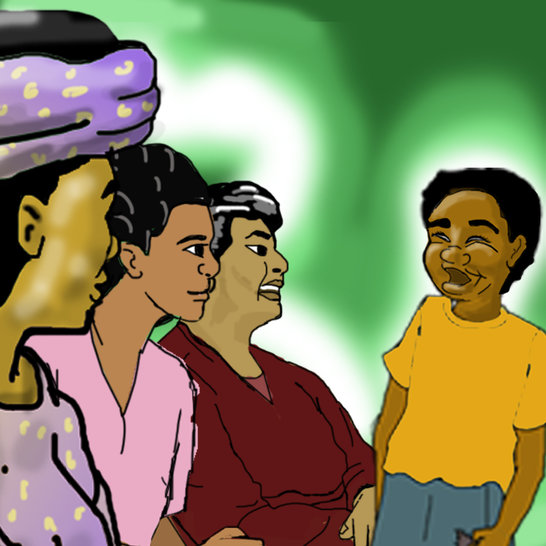
For example, he could sit with older members of the village and discuss important matters.
Sankimab di îra ge ǃkhū hâ aob oms tawa gere sîsen. ǁÎra ge ǁgoaga furuse omsa xu gere ī tsî tsuxub ǃnâ ǀgui gere oaǀkhī. Sankimab ge ǁîb ǃgâsas ǀkha gere hâ.
The parents of Sakima worked at the rich man’s house.
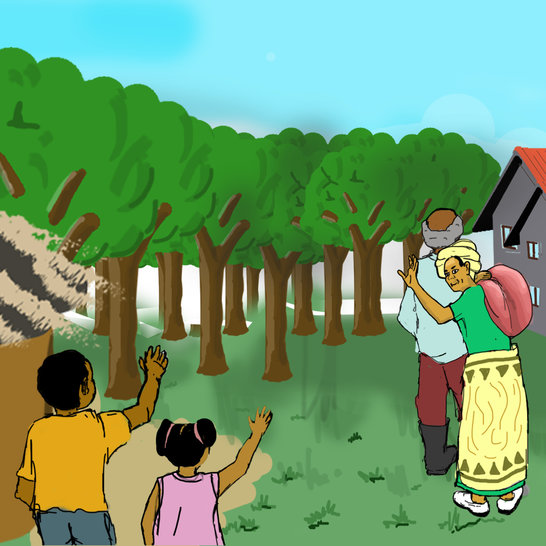
They left home early in the morning and returned late in the evening.
Sakima was left with his little sister.
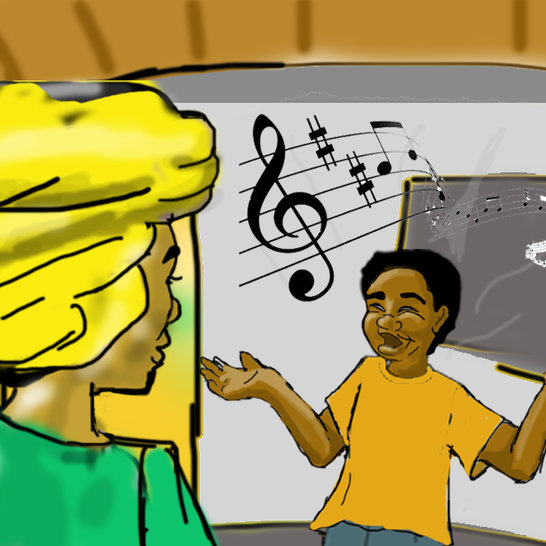
Sankimab ge made ǁnaes xa ge ǃgâibahe i. ǀGui tsēs ge ǁîb mamasa ge dî bi, “Mâpats nē amde ra ǁkhāǁkhāsen, Sankima?”
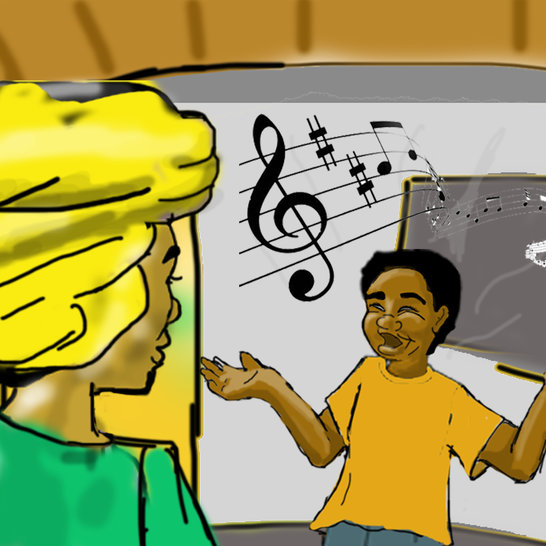
Sakima loved to sing songs.
One day his mother asked him, “Where do you learn these songs from, Sakima?”
Sankimab ge ge ǃeream, “Hās ǀguisa ra hî mama. Tita ge ti danas ǃnâ ra ǁnâu, tsî ta ge ra ǁnae.”
Sakima answered, “They just come, mother. I hear them in my head and then I sing.”
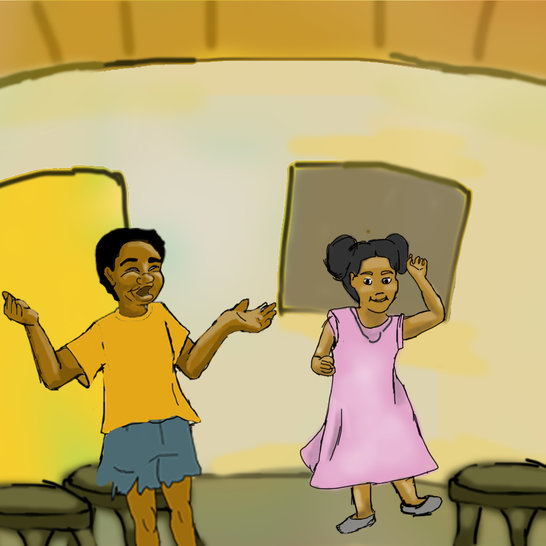
Sankimab ge ǁîb ǂkhari ǃgâsaba ǁnae as xa ge ǃgâibahe i,ǃgōsase, ǃās gere o. ǁÎb ǃgâsas ge ǁîba ǃgâibahe amsab gere ǁnae o gere ǀgausa gere ǃgâ. ǁÎs ge ǁkhoaxa ǀōba ǃoa gere ǂnā.
Sakima liked to sing for his little sister, especially, if she felt hungry.
His sister would listen to him singing his favourite song.
She would sway to the soothing tune.
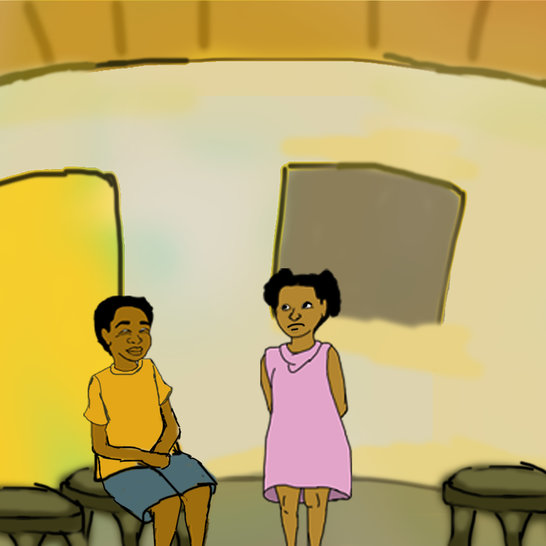
“ǁKhabats a ǁnae ǁkhā, Sankima,” ti’s ge ǁîb di ǃgâsasa gere ǀkhoma bi. Sankimab ge ǂansa ūǃoa tsî ǁkhawa gere ǁnae.
“Can you sing it again and again, Sakima,” his sister would beg him.
Sakima would accept and sing it over and over again.
ǀGui ǃoe ra ge ǁîb îra oms tawa a oaǀkhī, o ra ge ǁîra kaise ge ǃnōsa i. Sankimab ge ge ǂan i xū-i ǃgâi tama ǃkhaisa.
One evening when his parents returned home, they were very quiet.
Sakima knew that there was something wrong.
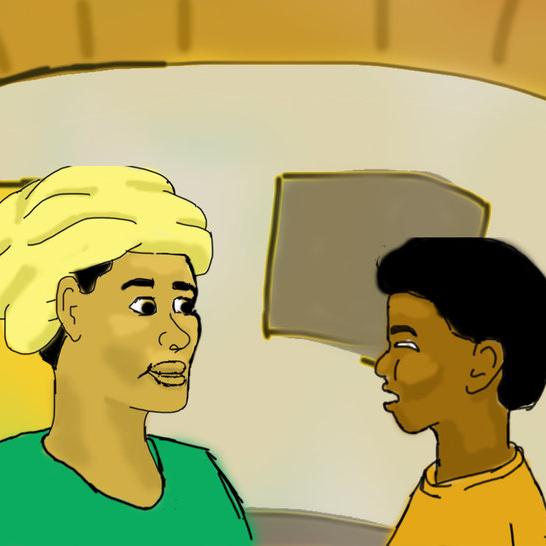
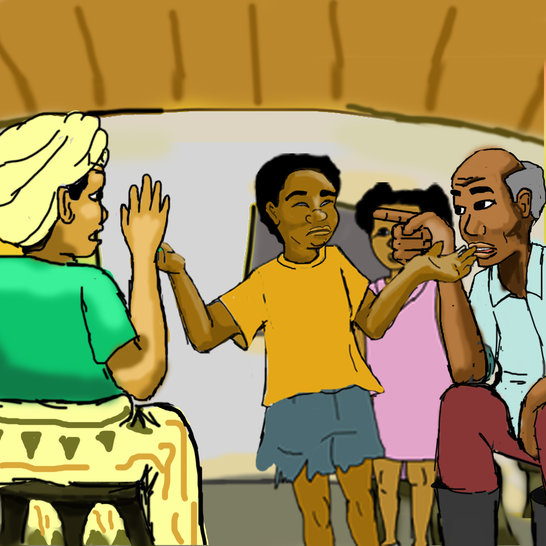
“Tare-e a tsū, mama, dad?” tib ge Sankimaba ra dî. Sankimab ge ra ǁnâu ǃkhū hâ aob di ôab kā hâ ǃkhaisa. Aob ge kaise ǃoa hâ tsî ra ǀguritsâsen.
“What is wrong, mother, father?” Sakima asked.
Sakima learned that the rich man’s son was missing.
The man was very sad and lonely.
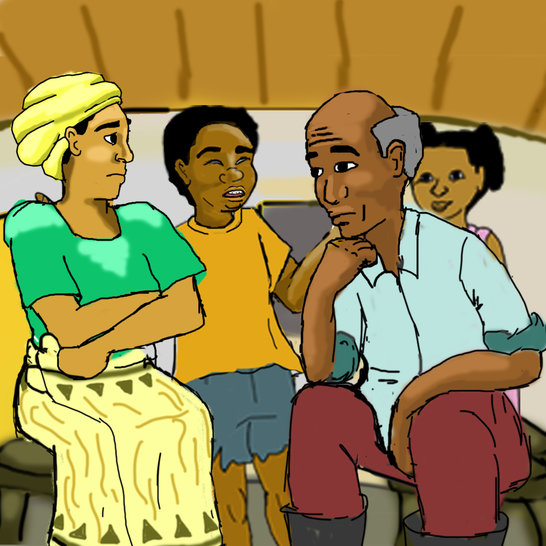
“Tita ge ǁîba a ǁnae a ǁkhā. ǁÎb ge ǁkhaba a ǂkhî ǁkhā,” tib ge Sankimaba ǁîb îra ra mî a. Xawe ra ge ǁîb îra ǁnâu ǂgao tama. “ǁÎb ge kaise ǃkhū hâ. Sats ge ǂgī a as ǀguisa ī. Satsa ra ǂâi sa a di nî hui bi ti?”
“I can sing for him. He might be happy again,” Sakima told his parents.
But his parents dismissed him.
“He is very rich. You are only a blind boy. Do you think your song will help him?”
Xaweb ge Sankimaba ǀûsen tama hâ. ǁÎb ǃgâsas ge ra ǂkhâǃnâ bi. ǁÎS ge ra mî, “Sankimab amdi ge ǃâ ta ra o ra ǂkhîǂkhî te. ǁÎdi ge ǃkhū hâ aob tsîna nî ǂkhîǂkhî.”
However, Sakima did not give up.
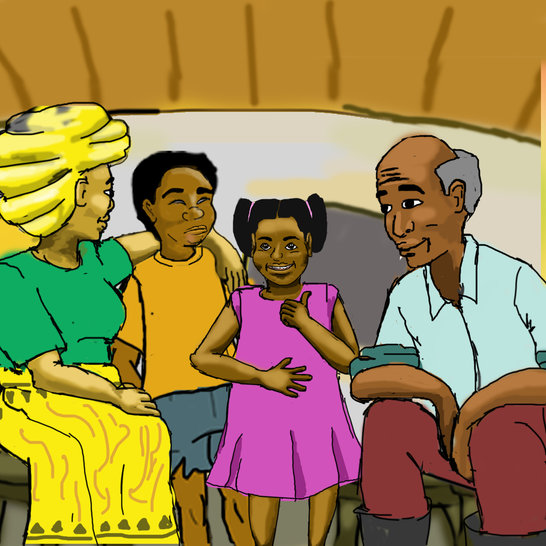
His little sister supported him.
She said, “Sakima’s songs soothe me when I am hungry. They will soothe the rich man too.”
Sao ra tsēb ge Sankimaba ǁîb di ǃgâsasa ra ǂgan îs ǃkhū hâ aob di oms ǁga ǃgû-ū bi.
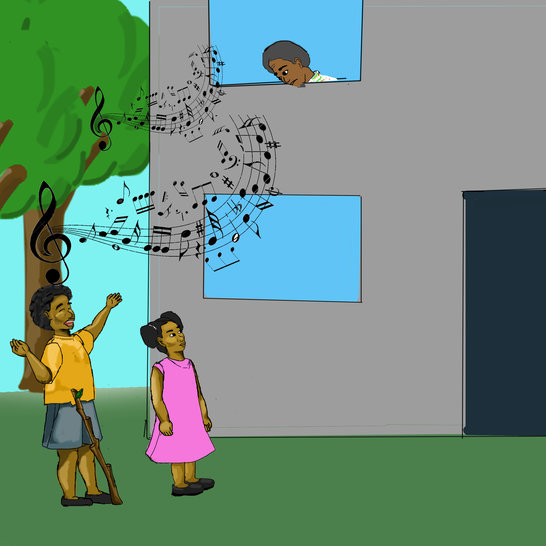
The following day, Sakima asked his little sister to lead him to the rich man’s house.
ǁÎb ge ǀgui kai mûǂuidaos ǃnāka mâ tsî ǁîb ǁKhoaxa amsa ra ǁnae tsoatsoa. ǁAeb ǀkhas ge ǃkhū hâ aob di danas ra kai mûǂuidaosa xu ra ǀhōǂuisen.
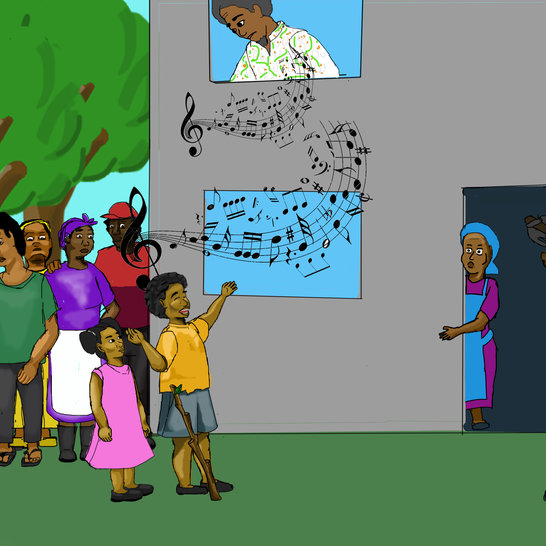
He stood below one big window and began to sing his favourite song.
Slowly, the head of the rich man began to show through the big window.
Sîsenaon ge dī ra xūna ra ǀû. ǁÎn ge Sankimab di ǁKhoaxa amsa ra ǃgâ. Xaweb ge ǀgui aoba ra mî, “ǀGuis khami ī khoe-i tsîn ge ǀhonkhoeba go ǂkhîǂkhî ǁoa î. Nē ǂgī axaba ra ǂâi ǁîb xa nî ǂkhîǂkhîhe ti?”
The workers stopped what they were doing. They listened to Sakima’s beautiful song.
But one man said, “Nobody has been able to console the boss. Does this blind boy think he will console him?”
Sankimab ge ǁîb amsa ǁnaetoa tsî ra dawasen îb oaga. Xaweb ge ǃkhū hâ aoba ǃkhoeǂoaxa tsî ra mî, “Toxopa ǁkhawa ǁnae re.”
Sakima finished singing his song and turned to leave.
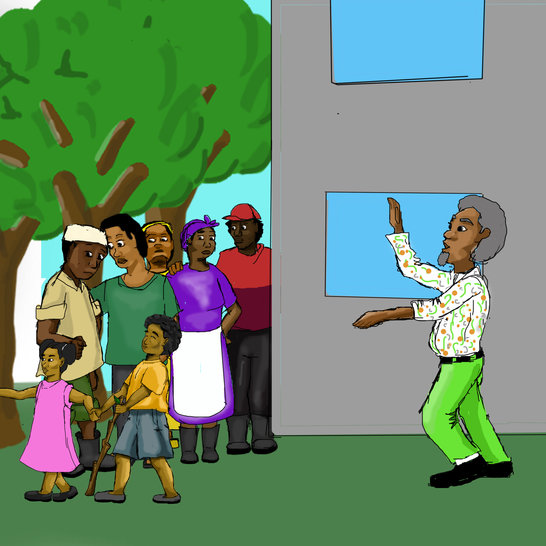
But the rich man rushed out and said, “Please sing again.”
ǁKhā ǁaeb ai kha ge ǀgam aokha tani-ūdab ai ǁgoe khoe-e tani hâse ra ǀkhī. ǁÎkha ge ǃkhū hâ aob di ôaba ǂnautsûtsûsase daob xōǀkhā ge hō.
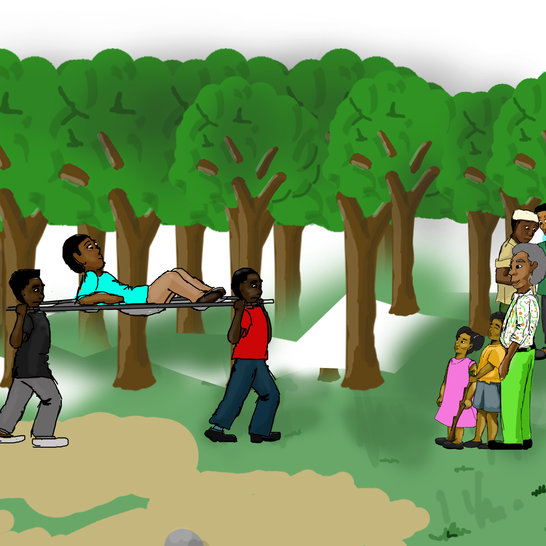
At that very moment, two men came carrying someone on a stretcher.
They had found the rich man’s son beaten up and left on the side of the road.
ǃKhū hâ aob ge kaise ge ǂkhî ôadabab ge mû o. ǁÎb ge Sankimaba ǂkhîǂkhîhes ǃaroma ge mātawa-am. ǁÎb ge ôasab tsî Sankimab hâkha ǀaeǁgâub ǁga ge ī-ū, îb Sankimaba ǁîb mûde ǀaeǃkhōhe tsî mûs ǁkhāsîba hō-oa.
The rich man was so happy to see his son again.
He rewarded Sakima for consoling him.
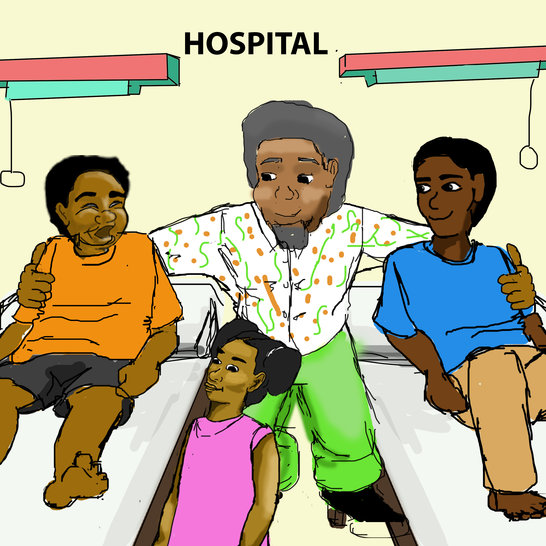
He took his son and Sakima to hospital so Sakima could regain his sight.


 Ursula Nafula
 Peris Wachuka
 Ngeve Shangombe
 Khoekhoegowab
 Level 3
 The audio for this story is currently not available.