Odongo na Apiyo wekekaa mjinyi na ndee yawo. Walewera ifunga shule ko msia wairime enda irikira kekuye yao. Naleke kaa kufui ziwenyi handu waleke wara samaki.
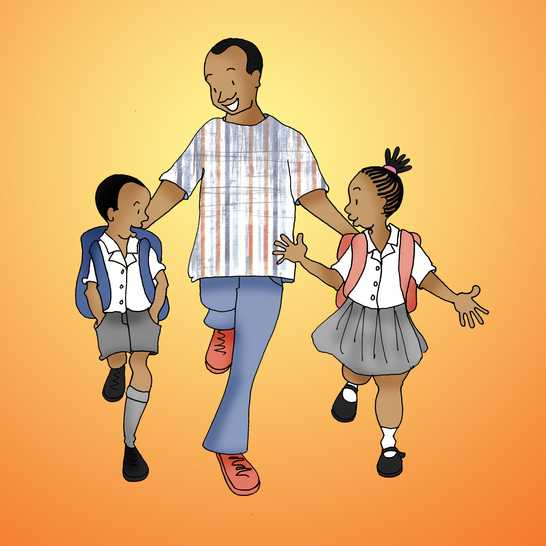
Odongo and Apiyo lived in the city with their father.
They looked forward to the holidays. Not just because school was closed, but because they went to visit their grandmother. She lived in a fishing village near a large lake.
Odongo na Apiyo waletauka nye keri keenda irikira kekuye yao ko keri kingi. Kio kyoikyo walesanyia nzora zawo ko yenda kyaro keenda kanyi. Wale irima lala vo walekapa sumu tarara ko kyaro kyawo.
Odongo and Apiyo were excited because it was time to visit their grandmother again.
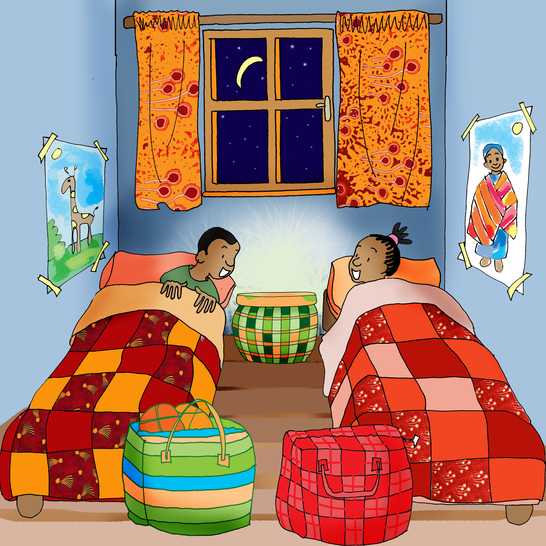
The night before, they packed their bags and got ready for the long journey to her village. They could not sleep and talked the whole night about the holiday.
Early the next morning, they left for the village in their father’s car.
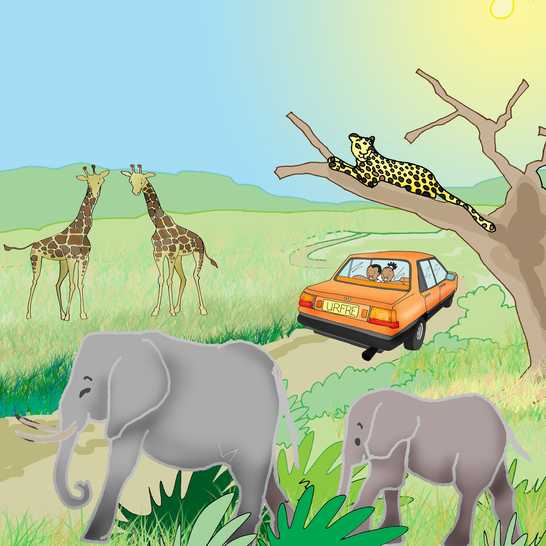
They drove past mountains, wild animals and tea plantations. They counted cars and sang songs.
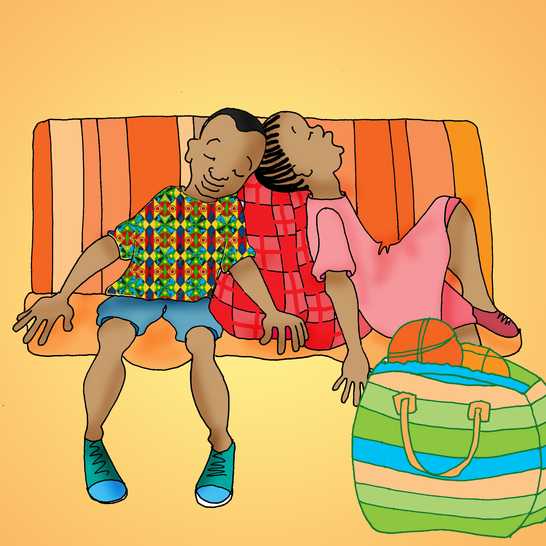
Keri kifui wana walechoka wakarengera.
After a while, the children were tired and fell asleep.
Auye nalewaamza Odongo na Apiyo lilya waleshika kanyi. Walekoya kekuye yao, Nyar-Kanyada, naomoiye wanda ya ikiri itakawenyi. Ko Dholuo, Nyar-Kanyada maana o waka o wanda wa Kanyada. Nekeri mrumka mcha na mbanzi.
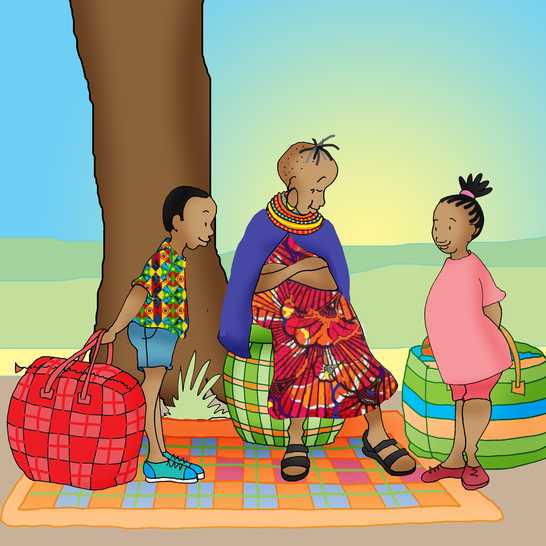
Father woke up Odongo and Apiyo as they arrived in the village.
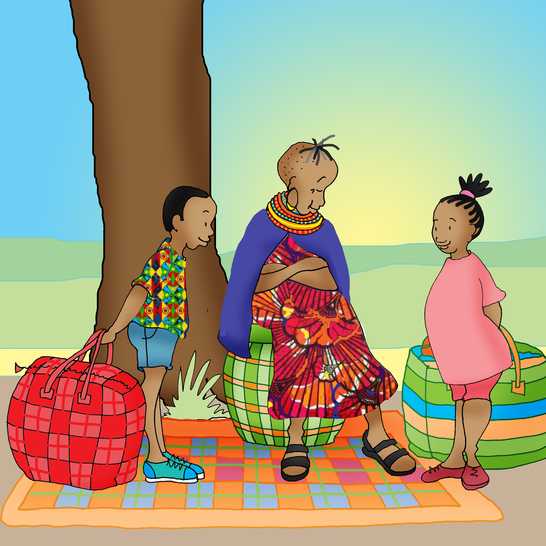
They found Nyar-Kanyada, their grandmother, resting on a mat under a tree.
Nyar-Kanyada in Luo, means ‘daughter of the people of Kanyada’. She was a strong and beautiful woman.
Nyar-Kanyada nalewaiza mba kashina na kawaimbia ko mkundo.Wachukuu weore msia fo mringa kirimira wacha nakyo mrinyi. “Ambilia yako kuoka,” Odongo aleamba. “Ote, okia yako,” Apiyo aliemba.
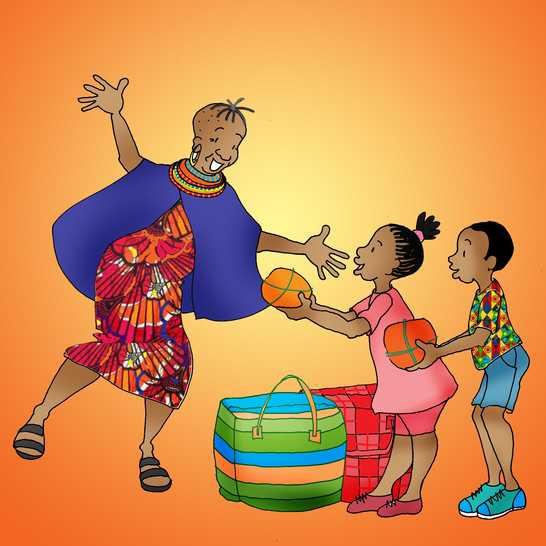
Nyar-Kanyada welcomed them into the house and danced around the room singing with joy.
Her grandchildren were excited to give her the presents they brought from the city.
“First open my gift,” said Odongo.
“No, my gift first!” said Apiyo.
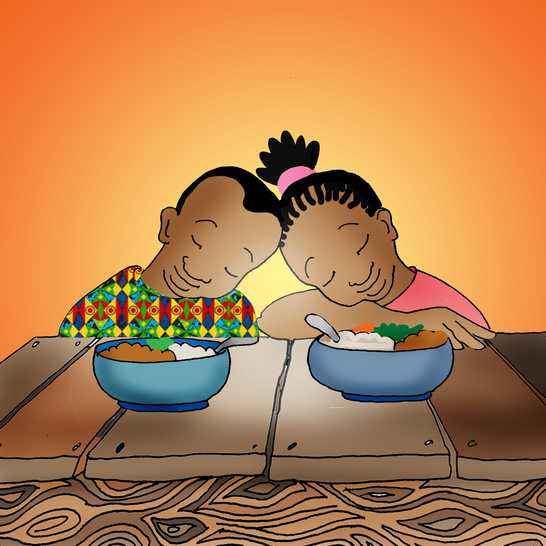
When it was dark they returned to the house for dinner. Before they could finish eating, they were falling asleep!
Lya ngama auye yao naleuya kulya kiaro kawaraa wana ko Nyar-Kanyada.
The next day, the children’s father drove back to the city leaving them with Nyar-Kanyada.
Odongo na Apiyo waletarama kekue yao shitundio sha kanyi. Waleraia mringa na lenda tolanguu. Walesanya mapore ha nguku na haa mboka za mare bustanyinyi.
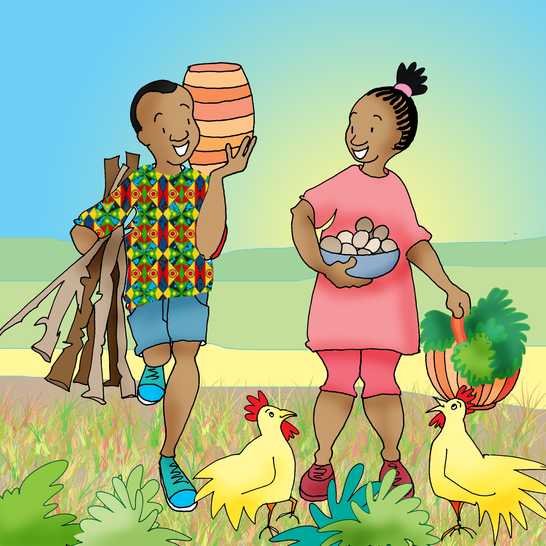
Odongo and Apiyo helped their grandmother with household chores. They fetched water and firewood. They collected eggs from the chickens and picked greens from the garden.
Nyar-Kanyada nalewalosha wachuku cha sandu waikora ukari ulamuomu wela na supu.
Nalewalora mbare ye kora mchele fo nasi fo lya na samaki zikaange.
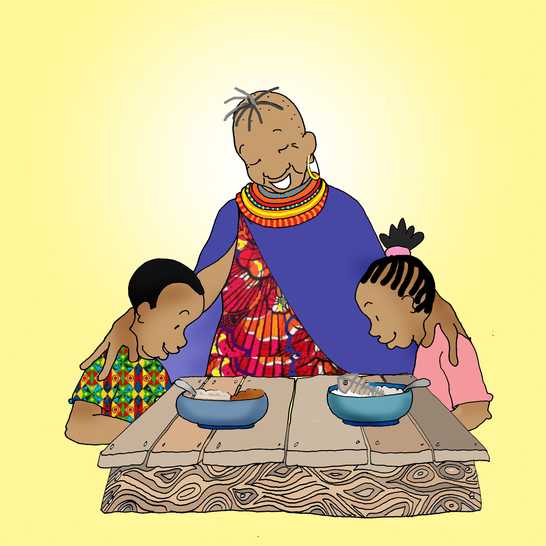
Nyar-Kanyada taught her grandchildren to make soft ugali to eat with stew. She showed them how to make coconut rice to eat with roast fish.
Ngamenyi imu, Odongo naleenda lisa mbe za kekuye. Zikarichia mremenyi for wamrasa.
Odongo nalemsuira menyi o mrasa. Menyi o mrema nekundi warilya mle kiva zilelya mremenyi koke. Wokia mkonu fo Odongo alihakikisha mbe zikeende se ukiwa vo.
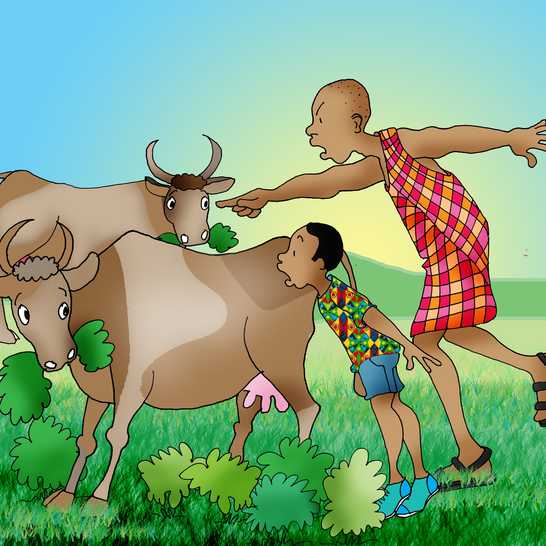
One morning, Odongo took his grandmother’s cows to graze. They ran onto a neighbour’s farm.
The farmer was angry with Odongo. He threatened to keep the cows for eating his crops. After that day, the boy made sure that the cows did not get into trouble again.
Mkonu fungi wakoku waleenda kinyange kimu na Nyar-Kanyada. Nyar-Kanyada newore kibanda kekumba mboka za mare, sukari na sabunyi. Apiyo nelekekundi wawia wandu uru wo shindo wakekumba. Odongo nalewafungia wandu shindo waleshiura.
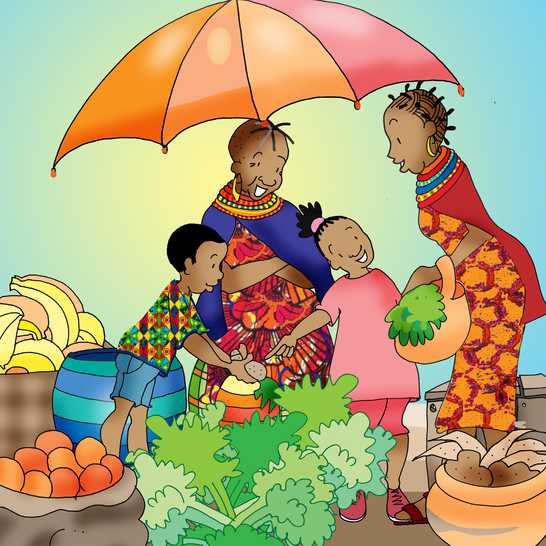
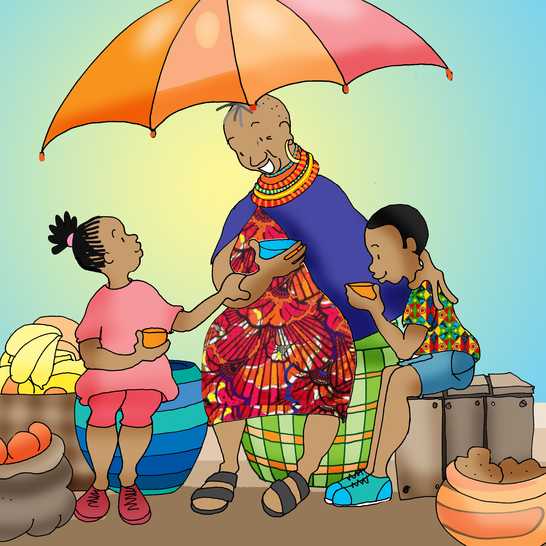
On another day, the children went to the marketplace with Nyar-Kanyada. She had a stall selling vegetables, sugar and soap.
Apiyo liked to tell customers the price of items. Odongo would pack the items that customers bought.
Kiukwanyi walenyo chai kimu. Waletarama kekuye yao itala eleri aleziwaliria.
At the end of the day they drank chai tea together. They helped grandmother to count the money she earned.
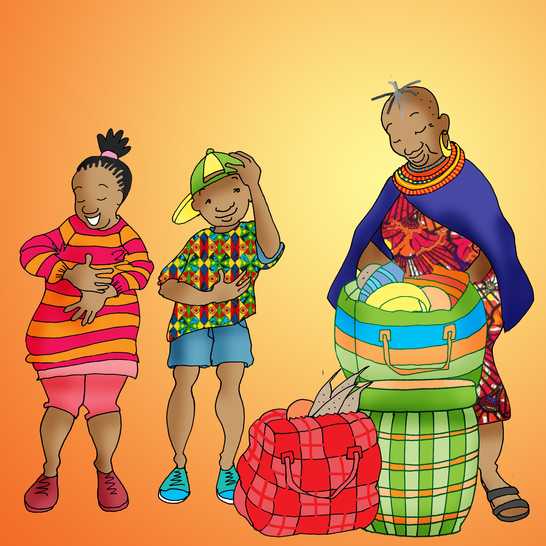
Iomoya ileshikia isia na wakoku wekeri iuyakyoro. Nyar-Kanyada nalemnenga Odongo kofia na Apiyo sweta. Nalewafungia kichau ke lya njienyi.
But too soon the holidays were over and the children had to go back to the city.
Nyar-Kanyada gave Odongo a cap and Apiyo a sweater. She packed food for their journey.
Ndee yao lilya alecha waonduo wekundi enda vo. Wakaterewa waende na Nyar-Kanyada kyaro. Nalekeneruo kaamba, “Ngamakuo, njiechiirima cha kyaro vo. Nkewere mche kanyi koko se.”
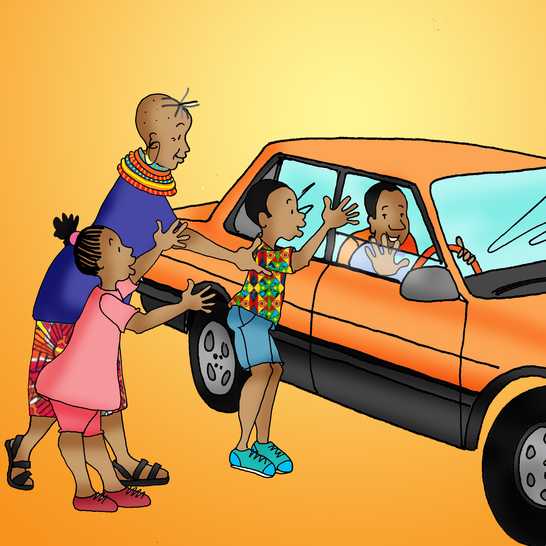
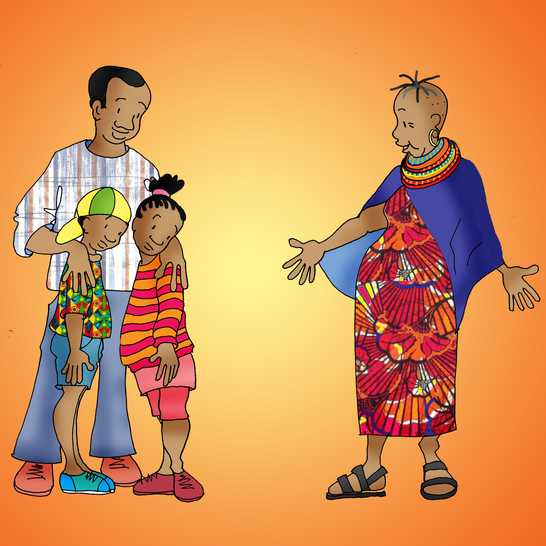
When their father came to fetch them, they did not want to leave. The children begged Nyar-Kanyada to go with them to the city.
She smiled and said, “I am too old for the city. I will be waiting for you to come to my village again.”
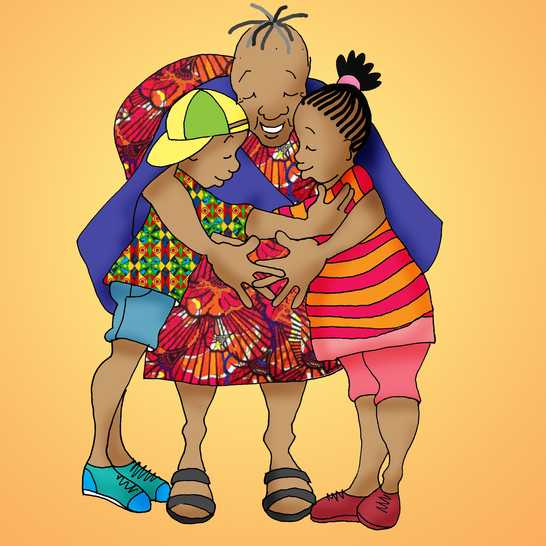
Odongo na Apiyo walekumbatiana kimu wakambia nakovo.
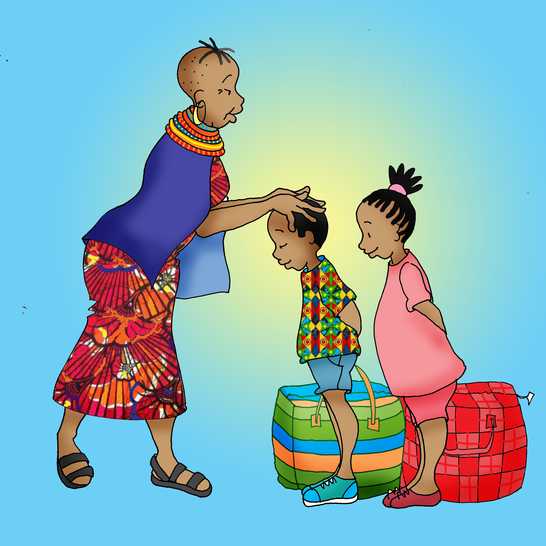
Odongo and Apiyo both hugged her tightly and said goodbye.
Odongo na Apiyo wakimauya shule, waleongoya woroe wawo cha sandu maisha ya kanyi ekere. Wakoku wengi weichi maisha ha mrinyi hamecha. Wengi waichi maisha ha kanyi hamecha kota ha kyaro. Ki nganyi, kila umu naleirikia oka Odongo na Apiyo wewore kekue yawo o mbare zingi!
When Odongo and Apiyo went back to school they told their friends about life in the village. Some children felt that life in the city was good. Others felt that the village was better.
But most of all, everyone agreed that Odongo and Apiyo had a wonderful grandmother!